
Last updated November 21, 2026
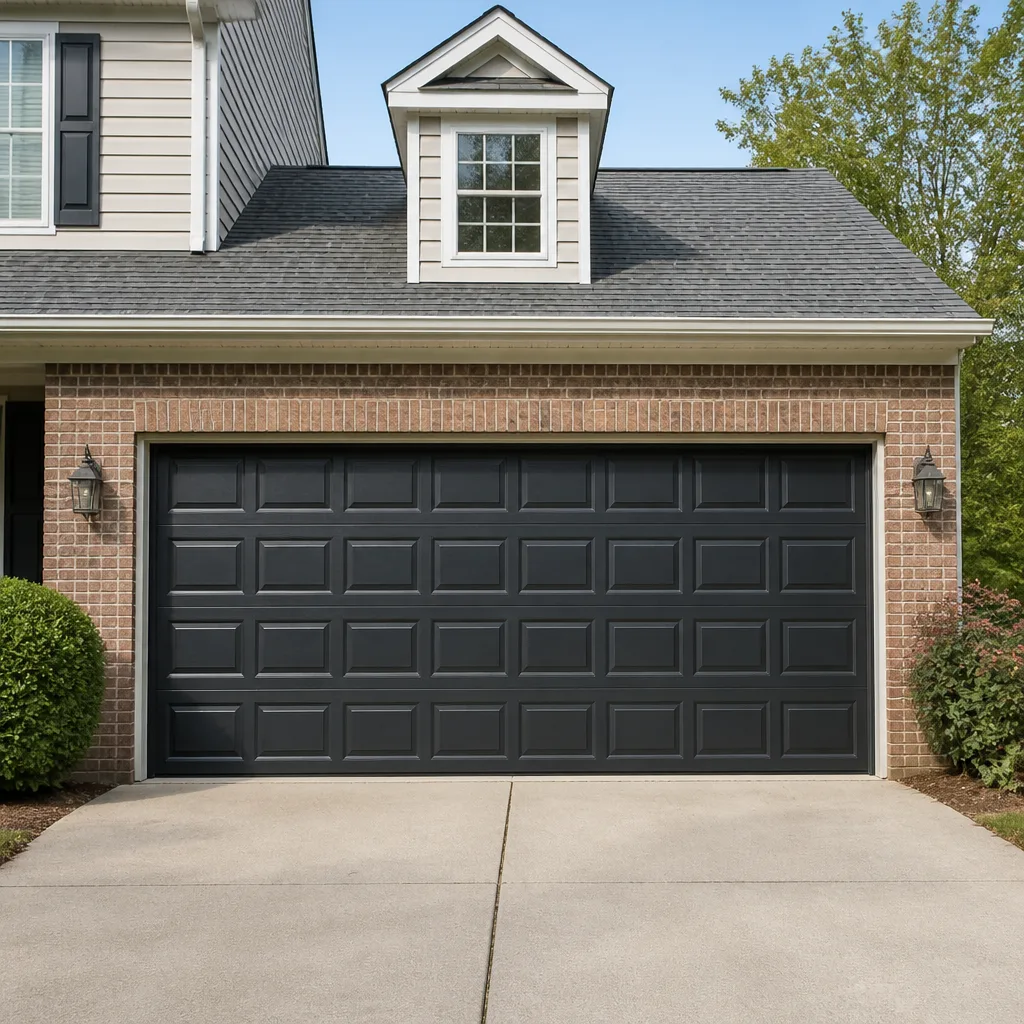 Raised-panel steel
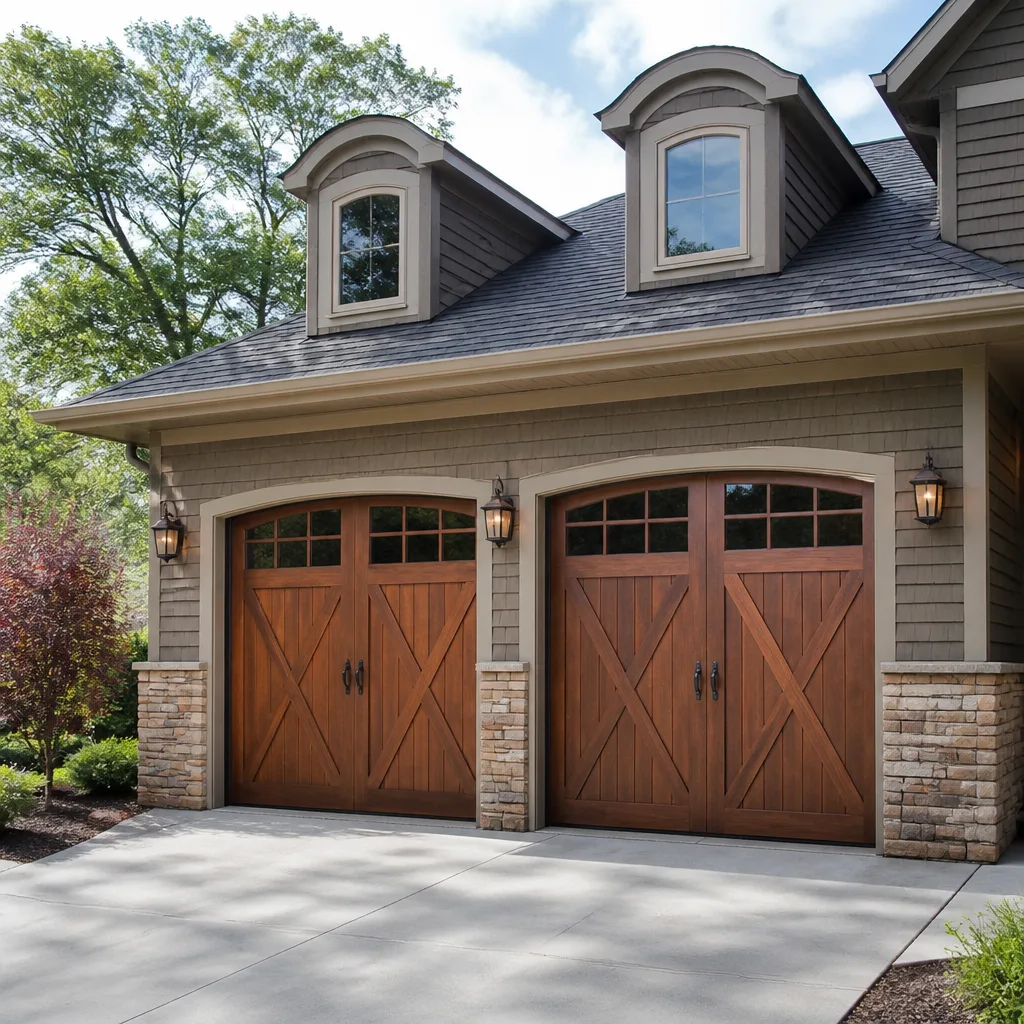 Carriage house
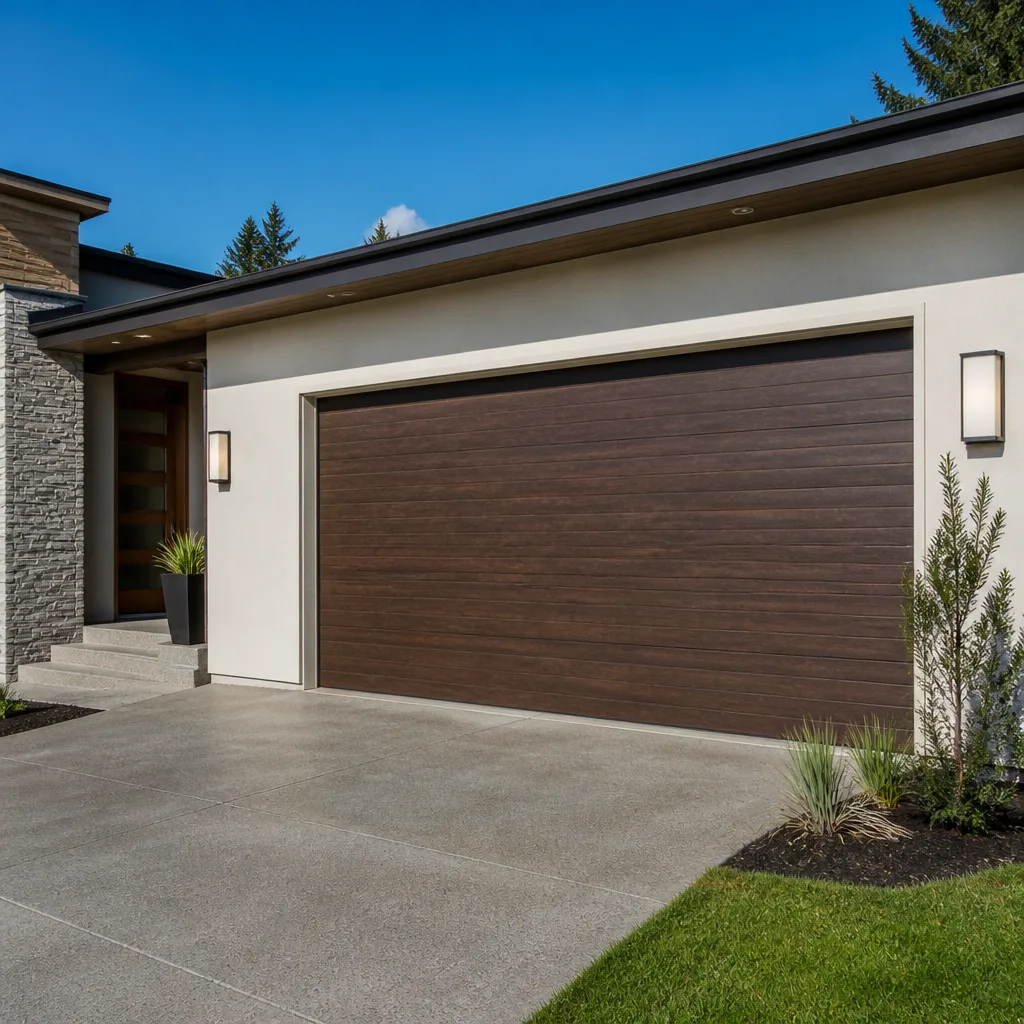 Modern flush
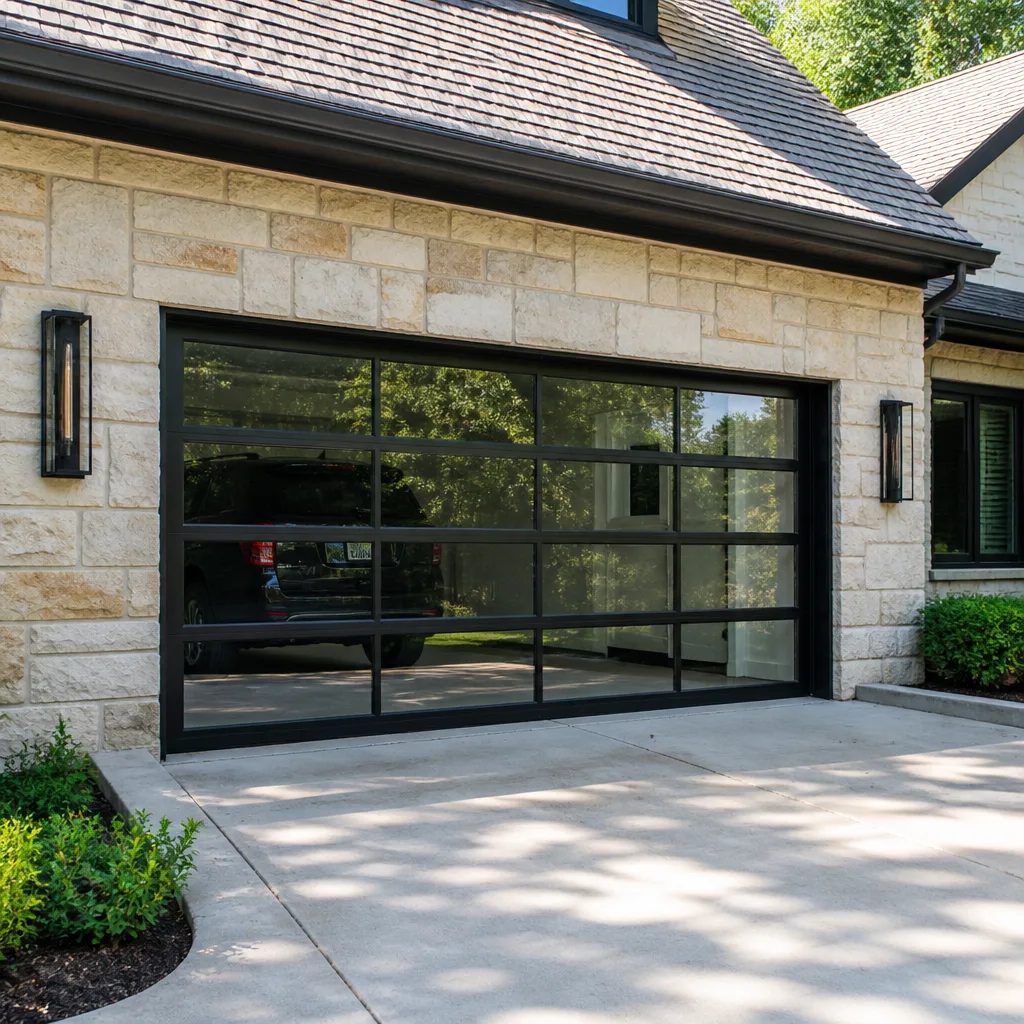 Full-view glass
 LiftMaster openers
 Chamberlain openers
Full 25-point door and opener safety check with every visit - springs, cables, rollers, tracks, and your LiftMaster or Chamberlain opener included
You get a price before we start. It does not change when the pro arrives.
Get your free estimateDIY vs Professional Garage Door: The Chesapeake Homeowner’s Decision Guide
Torsion spring replacement injures homeowners across the U.S. every year, and it’s rarely because they were careless. A spring wound to roughly 150 ft-lbs of torque stores enough energy to shatter a wrist or worse if the winding bar slips, and no video eliminates that physics. The real question isn’t whether you’re handy enough. It’s whether a given task carries stored energy, structural load, or a safety reversal system that fails silently when it’s wrong. This guide draws that line task by task, so you know exactly where DIY saves real money in Chesapeake and where it creates a liability that costs more to undo than the original quote.
Quick Answer
Weatherstripping, keypad mounting, painting, and trim work are genuinely safe DIY jobs in Chesapeake. Roller replacement is DIY-capable if your door is in balance and you support it properly first. Springs, cables, and anything involving the high-tension side of the system are professional-only work, full stop. Opener installation sits in the middle: possible for a confident homeowner with the right tools, but only on a door that’s already balanced and with the safety reversal tested before anyone uses it. For everything on the dangerous side of that line, call Chesapeake Garage Door Repair Experts at (877) 419-7485. We answer 24/7. Fast dispatch from 7am to 7pm, Sunday through Friday.
Styles & brands we work with
- Raised-panel steel
- Carriage house
- Modern flush
- Full-view glass
- LiftMaster openers
- Chamberlain openers
Table of Contents
- The Task-by-Task Decision Matrix
- Truly DIY-Safe Tasks and the Skills They Require
- Roller Replacement: DIY-Capable With Real Caveats
- Springs and Cables: Why These Are Professional-Only
- Opener Installation: The Conditions That Make DIY Reasonable
- Virginia Liability, Insurance, and Resale Disclosure
- The Cost-Honest Comparison
- The Middle Path: Split the Job and Win
The Task-by-Task Decision Matrix
Here’s the practical map. Every garage door job falls into one of three buckets, and the bucket is decided by physics, not by confidence.
- DIY-safe: weatherstripping (bottom seal and side jambs), keypad and wall button mounting, painting and staining, decorative trim, lubrication, and visual inspections.
- DIY-capable with caveats: roller replacement, minor track adjustment on a door that’s already balanced, and opener installation on a door in good mechanical shape.
- Professional only: torsion spring replacement, extension spring replacement, cable replacement, drum and bearing plate work, panel replacement on a loaded door, and any diagnosis of a door that won’t stay balanced.
The dividing line is stored energy. Springs and cables hold the full weight of the door under tension. When one fails while you’re working on it, the door or the tooling moves with force you can’t stop. Weatherstripping and paint hold nothing. Rollers carry weight but not stored torque, which is why they sit in the middle. For help with the tasks in that last bucket, our garage door repair service covers springs, cables, tracks, and panels in one visit.
Chesapeake homes vary a lot here. Older construction in neighborhoods like Great Bridge and Deep Creek often has original extension springs or early torsion systems, while newer builds in Greenbrier and Western Branch tend to run torsion setups with modern openers. Knowing which system you have before you decide anything is the first practical step. A door with two springs over the center is torsion. A door with springs running along the horizontal tracks is extension.
Truly DIY-Safe Tasks and the Skills They Require
The tasks in this bucket don’t need a tool-store shopping list. They need an honest self-assessment against a short set of competencies. If you can answer yes to all of these, you can do the finish work on your Chesapeake door yourself.
- Can you work safely on a ladder? Bottom seals, side jambs, and trim all require ladder work at the height of your door opening. If you need a spotter or you don’t own a stable ladder, that’s a hire.
- Can you measure and cut accurately? Weatherstripping and trim have to fit within a quarter inch or they whistle, drag, or peel. A tape measure, a utility knife, and a miter saw are the whole kit.
- Can you follow a manufacturer’s instruction sheet exactly? Keypad pairing on a Genie or LiftMaster unit is a sequence, not a guess. The sequence is on the manual and nowhere else.
- Can you leave the mechanical system alone while you’re up there? This is the big one. The finish work is safe only if you don’t start “adjusting” the springs or cables while you have the ladder out.
Weatherstripping is the clearest example. A worn bottom seal on a Chesapeake door lets in rain, drafts, and pests, and replacing it takes a couple of hours with a flathead screwdriver and a new seal cut to width. Painting a steel Clopay or Amarr door is similar: light sanding, a bonding primer, and an exterior-grade paint, done on a dry day. Keypad mounting is a battery-powered drill and a pairing sequence. None of these touch a spring, a cable, or a track under load.
What you gain here is real. These tasks are where DIY actually pays, because the labor share of the price is high relative to the parts. We’ve seen plenty of Chesapeake homeowners do genuinely good work on their own seals and trim. The key is staying in this lane and not wandering into the next one.
Roller Replacement: DIY-Capable With Real Caveats
Rollers are the one mechanical job most careful homeowners can handle, and the caveat is that the door must already be in balance before you start. A squealing or grinding door usually has worn nylon rollers, and replacing them smooths the travel and quiets the noise. The problem is that rollers carry the door’s weight, so the safe sequence matters more than the parts.
- Test the balance first. Close the door, pull the opener release, and lift the door halfway by hand. If it stays put, the springs are doing their job and you can proceed. If it drops or flies up, stop. That door needs a professional, not rollers.
- Support the door. With the door closed, clamp a pair of locking pliers on the track just above the bottom roller on each side. That stops the door from rising while you work.
- Replace one roller at a time. Bend the track tab back, slide the old roller out, slide the new one in, and bend the tab back into place before you move to the next.
- Lubricate the new rollers and hinges with a garage-door-specific lubricant, then cycle the door by hand to confirm smooth travel before reconnecting the opener.
The caveat that trips people up: never remove the bottom bracket or the cable attached to it. That bracket is under cable tension even with the door closed, and it will release violently if you loosen it. Rollers slide out of the hinge, not off the cable. If your door has a broken roller housing, a bent track, or a cable that looks frayed, the job has moved out of the DIY lane. When that happens, our garage door opener repair and door service can sort the mechanical side in one trip.
In Chesapeake, humidity and the summer heat cycle age nylon rollers faster than you’d expect. A roller that’s cracked but still rolling is a warning, not a crisis. Replace them before they fail, not after.
Springs and Cables: Why These Are Professional-Only
This is the section where we don’t soften the message. Torsion and extension springs are the most mechanically dangerous part of any garage door, and cable work is close behind. The physics is simple: a spring wound to keep a 150 to 250 pound door in balance stores enough energy to injure or kill if it releases while you’re near it. The winding bars, the drums, and the cables are all part of the same loaded system, and there’s no safe way to work on that system from a ladder with hand tools.
Here’s what usually goes wrong when a homeowner tries it anyway:
- The winding bar slips. The spring unwinds in a fraction of a second, and the bar becomes a projectile. This is the most common serious injury in the trade.
- The spring is the wrong size or wind. Springs are matched to door weight and track radius. A mismatched spring either won’t hold the door or overloads the cables.
- The cable gets crossed or kinked. A kinked cable fails later, at speed, when the door is in motion.
- The door comes down on someone. A door that loses spring tension without warning closes fast and heavy.
The same rule applies to cables. Cable replacement requires relieving spring tension first, and if you don’t know how to do that safely, you don’t touch the cable. In our experience, the callbacks on DIY spring jobs almost always cost more than the original professional quote, because the failed attempt usually bends a track, damages a panel, or strips a drum along the way.
This is the work we specialize in. Spring repair is a core part of what we do, and our technicians have up to 9 years of experience with torsion and extension systems on doors from Clopay, Amarr, Wayne Dalton, and more. When your door’s spring gives out, don’t test the physics. Call (877) 419-7485. We answer 24/7. Fast dispatch from 7am to 7pm, Sunday through Friday.
Opener Installation: The Conditions That Make DIY Reasonable
Opener installation is the one job in this guide that sits genuinely in the middle. A confident homeowner with basic electrical comfort can replace a LiftMaster or Chamberlain opener in an afternoon, but only if a specific set of conditions is met. Skip one, and the job is a hire.
- The door is balanced and in good mechanical condition. A new opener on a door with a bad spring will burn out the motor or trip the safety reverse. Fix the door first.
- You have an existing outlet or a safe way to power the unit. Adding a circuit is electrical work. Running a cord across the ceiling isn’t.
- You can mount the rail and header bracket at the right height and angle. This is the part people get wrong. A misaligned rail causes binding, noise, and premature wear.
- You’ll test the safety reversal before anyone uses the door. The photo-eye sensors and the pressure reversal are non-negotiable safety systems. If the door doesn’t reverse when the beam is blocked, it’s not ready.
- You have a helper for the overhead work. A full opener assembly is awkward and heavy at ceiling height.
When installation goes wrong, it usually shows up later, not on day one. A rail mounted a little off causes the door to drag, which wears the opener gear. A poorly paired remote on a Genie or Craftsman system means repeat trips up the ladder. In Chesapeake, where the garage is often the main entry, an opener that quits is a household access problem, not a minor inconvenience.
If any of the five conditions above don’t hold, the smarter move is to have us handle it. Our garage door installation service covers openers and full doors, and we test the safety systems before we leave.
Virginia Liability, Insurance, and Resale Disclosure
This is the part most DIY guides skip entirely, and it matters in Chesapeake. When you do garage door work yourself, you take on the liability that would otherwise sit with the contractor. That exposure shows up in two places: insurance claims and resale.
On insurance: if a self-installed opener or a DIY spring job causes damage to your home or injury to someone in your household, your homeowner’s policy may still cover the damage, but the claim can be complicated by the fact that the work wasn’t done by a licensed professional. Policies vary widely, so the honest answer is to read your own policy and ask your agent directly. What we can tell you is that unpermitted or non-code-compliant work is exactly the kind of thing an adjuster will ask about.
On resale: Virginia requires sellers to disclose known defects, and a garage door system that was self-installed or self-repaired without a permit or inspection is a known condition you may need to disclose. If a buyer’s inspector flags the opener or the spring setup, the negotiation usually costs more than the original professional quote would have.
On permits and code: requirements vary by locality, and the practical rule is to call your city’s building department and ask before you start anything structural or electrical. We don’t invent code numbers or cite a section that may not apply to your address. The safest approach is to ask the authority that enforces it in Chesapeake. The good news is that the cleanest way to avoid the disclosure problem entirely is to have licensed and insured professionals handle the dangerous work. The pro is licensed and insured as their state requires, and the work gets documented.
The Cost-Honest Comparison
Here’s the comparison a lot of guides avoid. DIY savings are real on the finish tasks and mostly illusory on the dangerous ones. This table breaks down what actually happens to your budget in each category.
- Weatherstripping: DIY saves the full labor share. Parts are inexpensive, and the job is a couple of hours. Net win for DIY.
- Painting and trim: DIY saves labor, and the result is cosmetic. Net win for DIY if you enjoy the work.
- Keypad mounting: DIY saves a service call. Net win for DIY.
- Roller replacement: DIY saves labor if the door is balanced. If you get it wrong, you risk a track or a cable, and the repair costs more than the rollers. Marginal DIY.
- Opener installation: DIY saves labor, but a misaligned rail or a safety system that doesn’t pass eats that savings on the first callback. Marginal DIY, only under the five conditions above.
- Spring replacement: There is no honest DIY savings here. The risk of injury, the cost of a failed attempt, and the possible insurance and disclosure complications all point the same direction. Professional only.
- Cable replacement: Same answer. Professional only.
The pattern is clear. DIY pays where the work is finish-level and low-energy. It doesn’t pay where the system stores energy or holds the full weight of the door. When you add in the risk of a callback and the cost of a bent track or cracked panel from a failed attempt, the “savings” on a spring or cable job disappear fast.
For the professional side of that math, we give free estimates and the written quote is the price. Call (877) 419-7485 for an exact number. We answer 24/7. Fast dispatch from 7am to 7pm, Sunday through Friday.
The Middle Path: Split the Job and Win
The best risk-to-savings ratio in Chesapeake isn’t all-DIY or all-professional. It’s a split job, where the dangerous components go to a specialist and the finish work stays with you. This is the approach we recommend to homeowners who want to save money without taking on liability.
- Hire out the loaded system. Springs, cables, drums, and any track realignment go to a professional who can relieve tension safely and document the work.
- Do the finish work yourself. Painting, trim, bottom seals, and keypad mounting are all yours. They don’t touch a spring or a cable.
- Have the pros test the safety systems. Photo-eye reversal and pressure reversal should be verified by someone who knows what passing looks like, especially after any opener work.
- Keep the paperwork. A written record of professional work on the dangerous components is your best defense at resale and at claim time.
This is why we offer the full service spectrum in one place: repair, opener repair, spring repair, and new installation. You don’t have to hand off to a second contractor when the job changes shape. Whether the door is a Clopay, Amarr, Wayne Dalton, Genie, LiftMaster, Chamberlain, Craftsman, or Raynor system, we work on the brand already on your garage. And when the door won’t move, we will. Call (877) 419-7485. We answer 24/7. Fast dispatch from 7am to 7pm, Sunday through Friday.
Common Mistakes to Avoid
- Winding a torsion spring without the right bars. A screwdriver or a socket is not a winding bar. The tool slips under load, and the result is a serious injury. This is the mistake that ends in the emergency room.
- Removing the bottom bracket to change a roller. The bottom bracket holds the cable under tension even when the door is down. Loosen it wrong and it releases in your hand.
- Installing an opener on a door that’s out of balance. A new motor on a bad spring burns out fast. Fix the door before the opener goes on.
- Skipping the safety reversal test. If the door doesn’t reverse when the photo-eye beam is blocked, it’s not ready to use. Test it every time you work near the opener.
- Assuming Chesapeake permits work the same way everywhere. Requirements vary by locality. Call the city’s building department before any structural or electrical work.
- Buying a spring by eye. Springs are matched to door weight and track radius. A spring that’s the wrong size either won’t hold the door or overloads the cables.
- Letting a small seal problem become a panel problem. A failed bottom seal in a Chesapeake rainy season lets water in, and water at the base of a steel door leads to rust and panel damage. Replace the seal early.
See the difference
 Before
 After
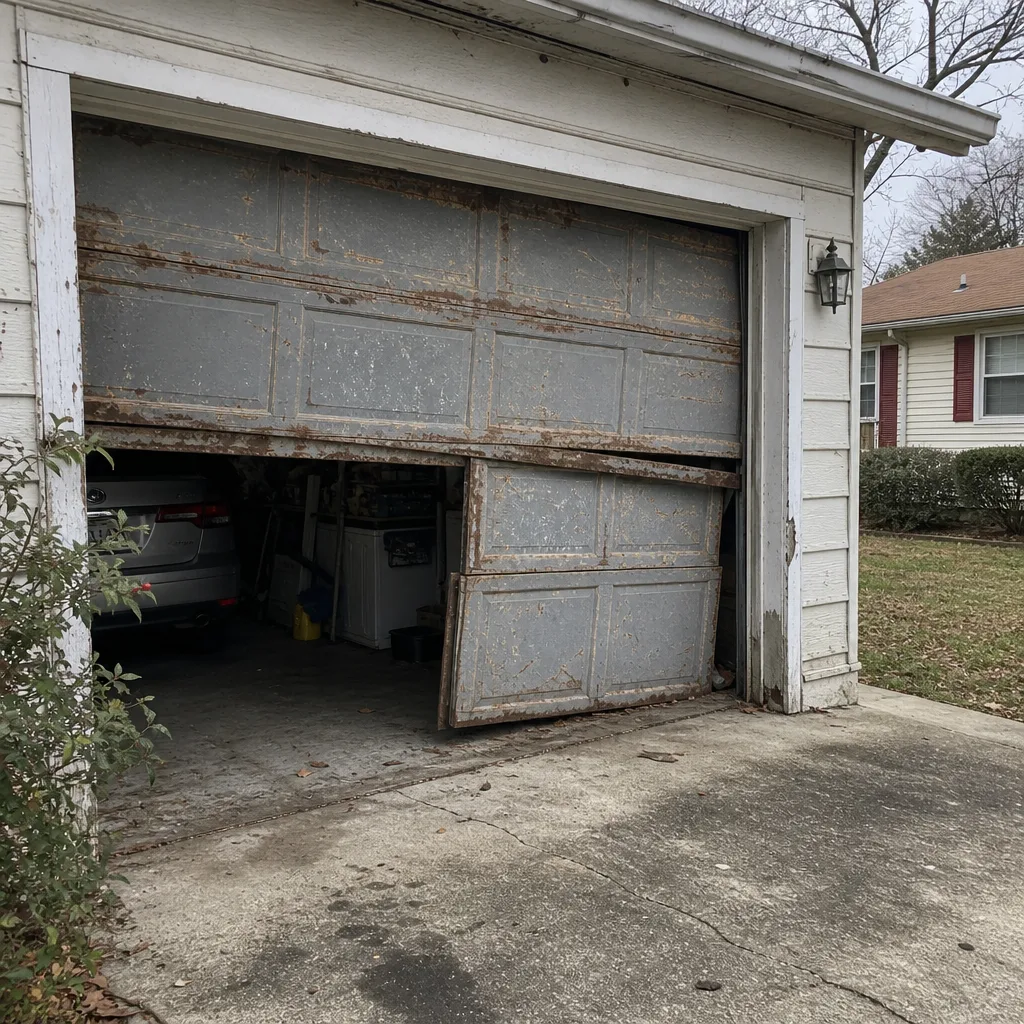 Before
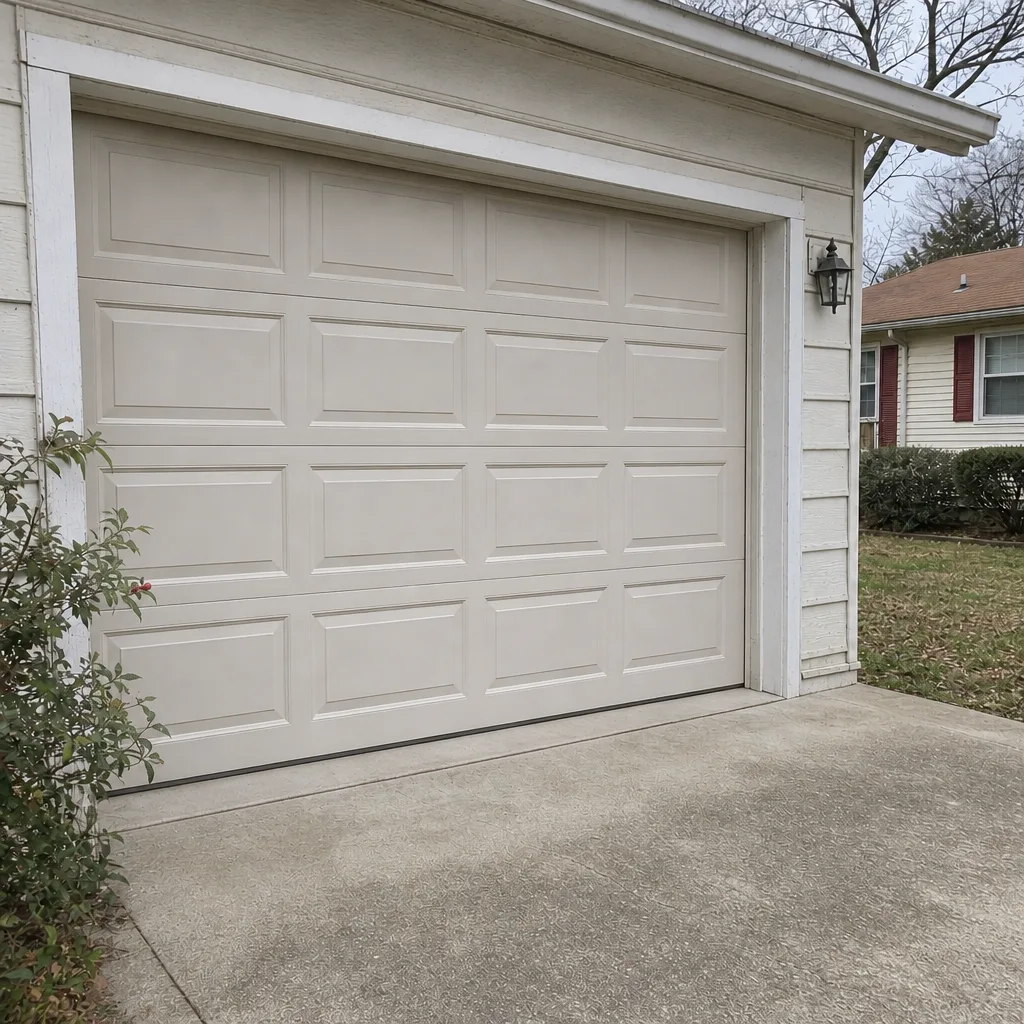 After
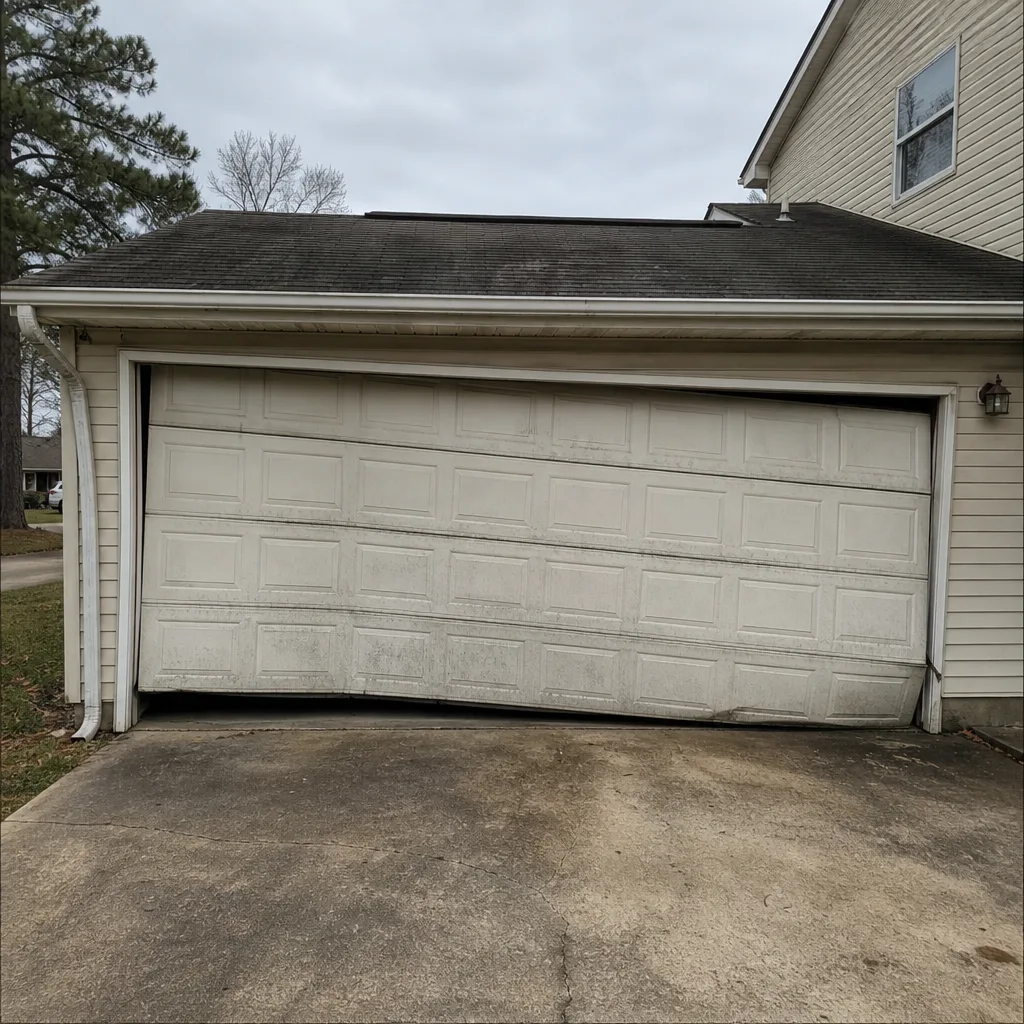 Before
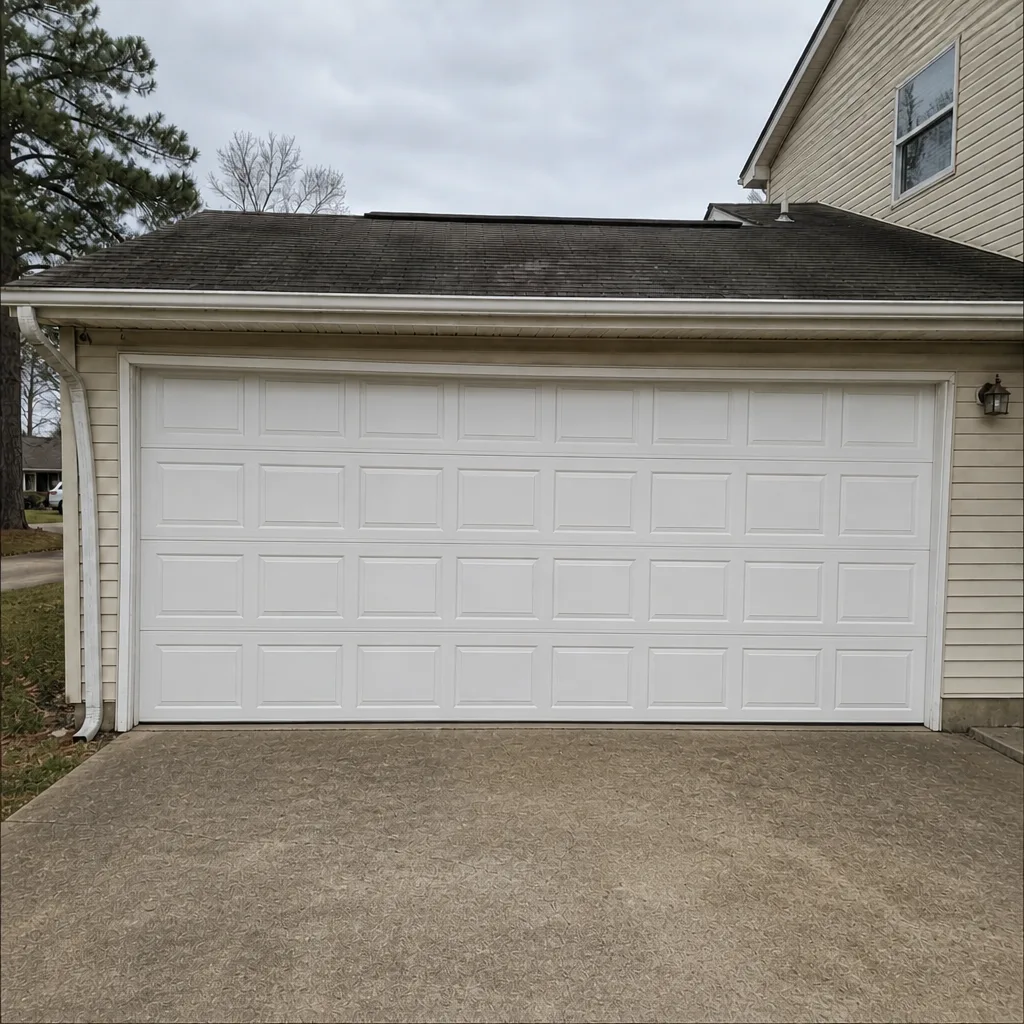 After
When to Call a Professional
Call a professional when the door won’t stay balanced, when a spring or cable is broken or frayed, when a panel is bent or off-track, or when the opener runs but the door doesn’t move. Call if you hear a loud snap from the ceiling, if the door comes down too fast, or if the safety reversal doesn’t pass. Call if you’re not sure which system you have. None of those are guesswork situations. Chesapeake Garage Door Repair Experts offers free estimates in Chesapeake. Call (877) 419-7485. We answer 24/7. Fast dispatch from 7am to 7pm, Sunday through Friday.
Frequently Asked Questions
No. Torsion and extension springs store enough energy to cause serious injury or death if they release while you’re working on them, and there’s no safe DIY method. Spring replacement is professional-only work, and the cost of a failed attempt usually exceeds the original quote. Call (877) 419-7485 for a free estimate. We answer 24/7. Fast dispatch from 7am to 7pm, Sunday through Friday.
Yes, if the door is balanced, you have safe power, and you can mount the rail and test the safety reversal correctly. If any of those conditions are missing, it’s a hire. A misaligned rail or a failed reversal test shows up later and costs more to fix than the installation would have. Call (877) 419-7485 for a free estimate.
Weatherstripping, painting and trim, keypad mounting, lubrication, and visual inspections are all safe DIY tasks. Roller replacement is DIY-capable if the door is balanced and you support it properly first. Springs, cables, and anything under tension are not. Call (877) 419-7485 if you’re unsure which category your job falls into.
Requirements vary by locality and by the scope of the work, so the direct answer is to call the City of Chesapeake’s building department and ask for your specific project. We don’t cite a code section that may not apply to your address. If you hire us, we can walk you through what the work involves so you can ask the right questions.
It can. Self-installed or self-repaired work can complicate a claim, and unpermitted work is exactly what an adjuster will ask about. Policies vary widely, so read your own policy and ask your agent directly. Having licensed and insured professionals handle the dangerous components is the cleanest way to avoid the problem.
Yes, same-day service is available for doors that won’t close, won’t open, or have a broken spring. Call (877) 419-7485. We answer 24/7. Fast dispatch from 7am to 7pm, Sunday through Friday, and we’re closed Saturday. A call outside dispatch hours is booked into the next opening.
Yes. The local pro is licensed and insured as their state requires, and our technicians have up to 9 years of experience with spring, cable, and opener systems. We work on LiftMaster, Chamberlain, Genie, Clopay, Amarr, Wayne Dalton, Craftsman, and Raynor equipment. Call (877) 419-7485 for a free estimate.
No. The written estimate sets the price, and we quote and agree on it before any work starts. If we find something additional during the job, we stop and talk with you before proceeding. Call (877) 419-7485 for an exact quote. Estimates are free.
The Bottom Line
The DIY vs professional question for garage doors isn’t about self-reliance. It’s a risk calculation, and the line is stored energy. Finish work like weatherstripping, paint, and keypads is yours to keep, and rollers and openers are yours if the conditions hold. Springs and cables are professional-only, and no amount of confidence changes the physics. In Chesapeake, the middle path wins: hand the dangerous components to a specialist, do the finish work yourself, keep the paperwork, and keep the safety systems tested. That’s the approach that saves money without creating a liability. When you need the professional side of the split, call (877) 419-7485. The estimate is free.
Written by the team at Chesapeake Garage Door Repair Experts.