
Last updated November 21, 2026
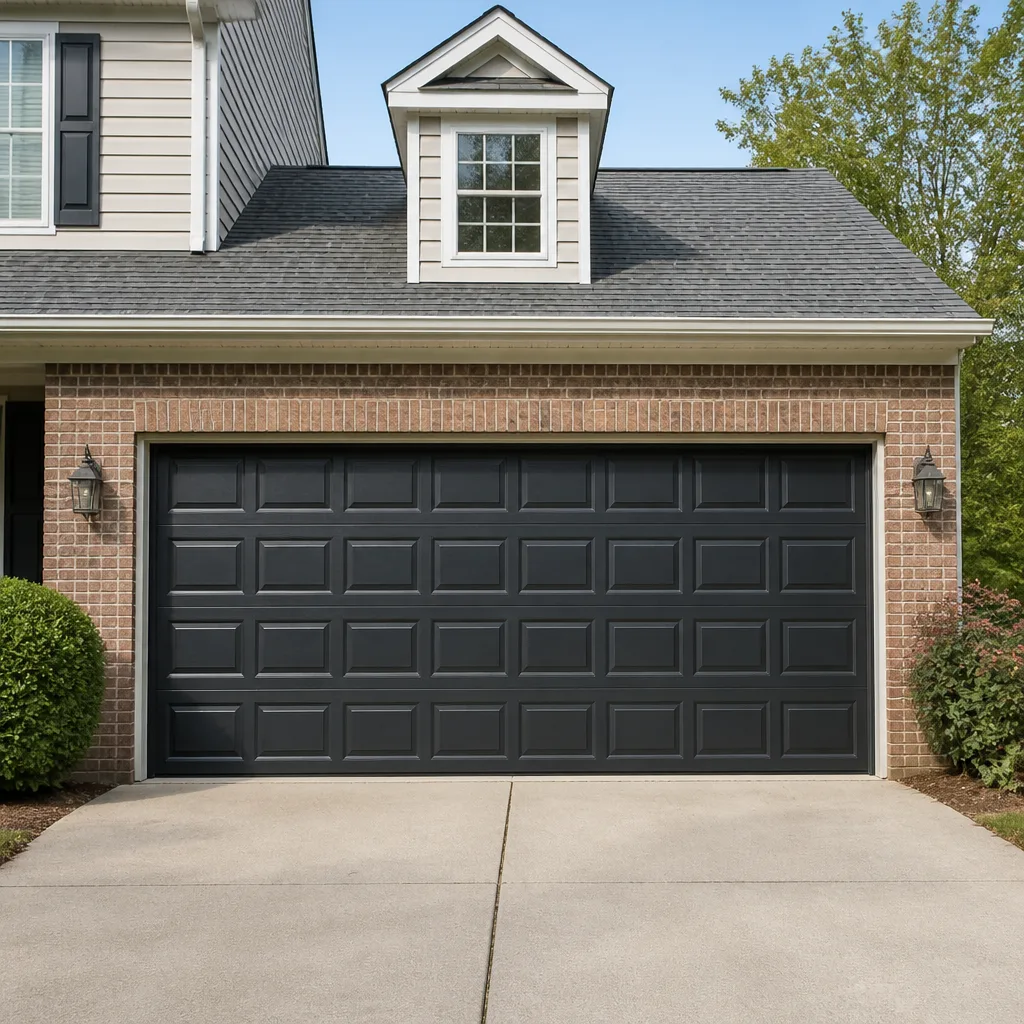 Raised-panel steel
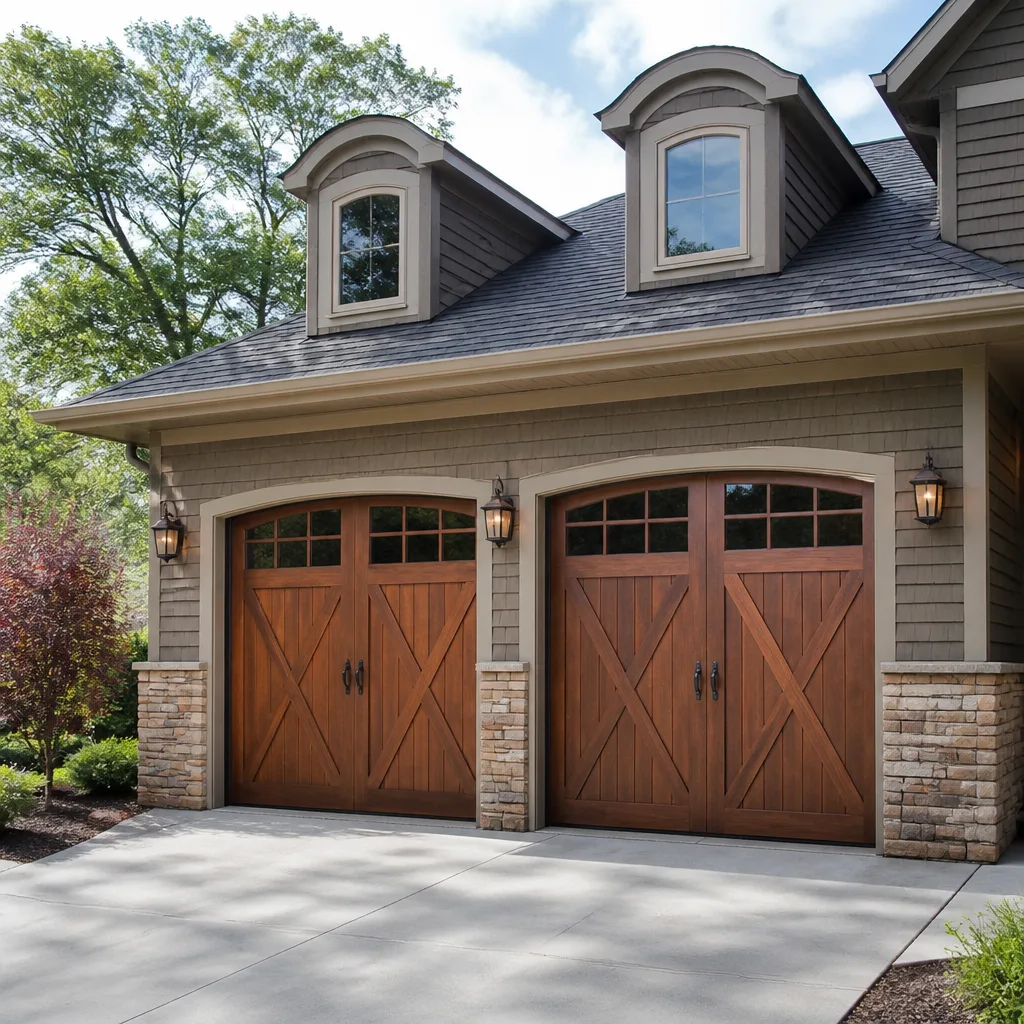 Carriage house
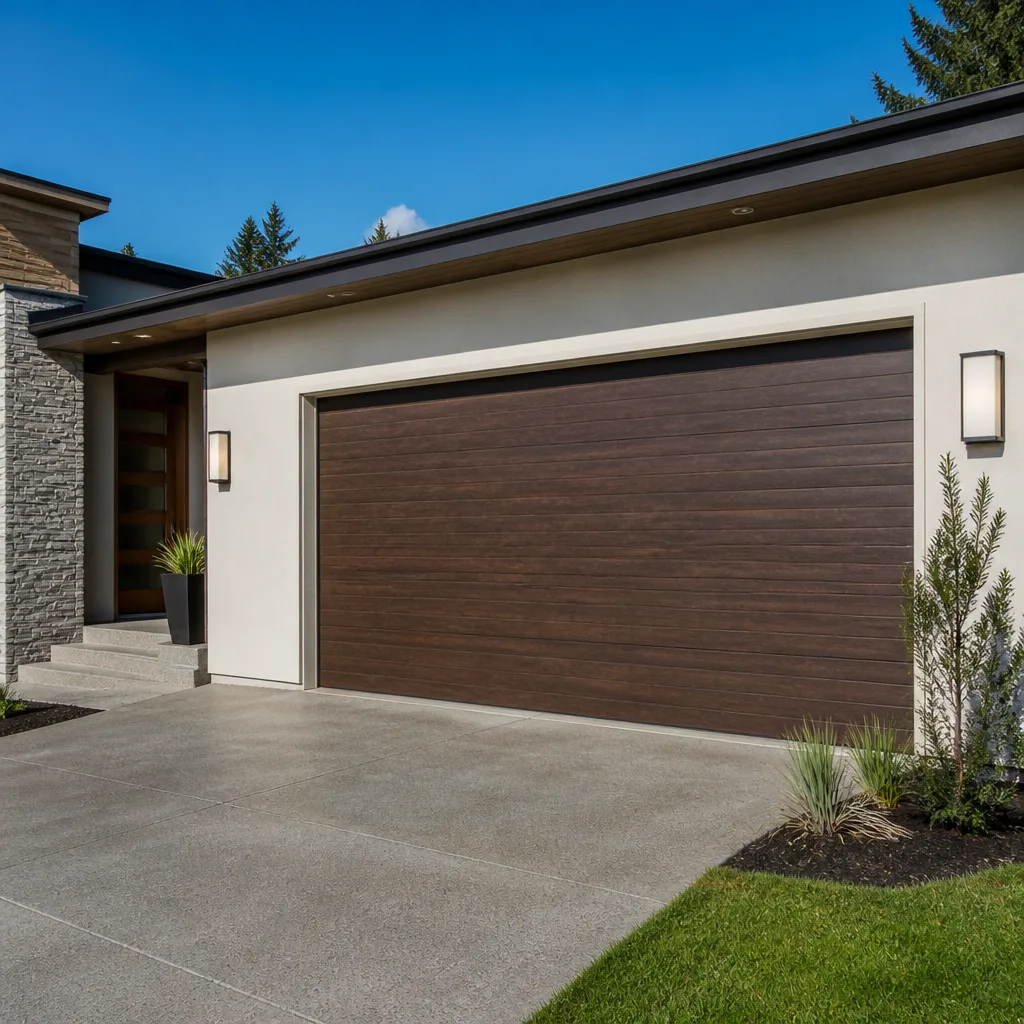 Modern flush
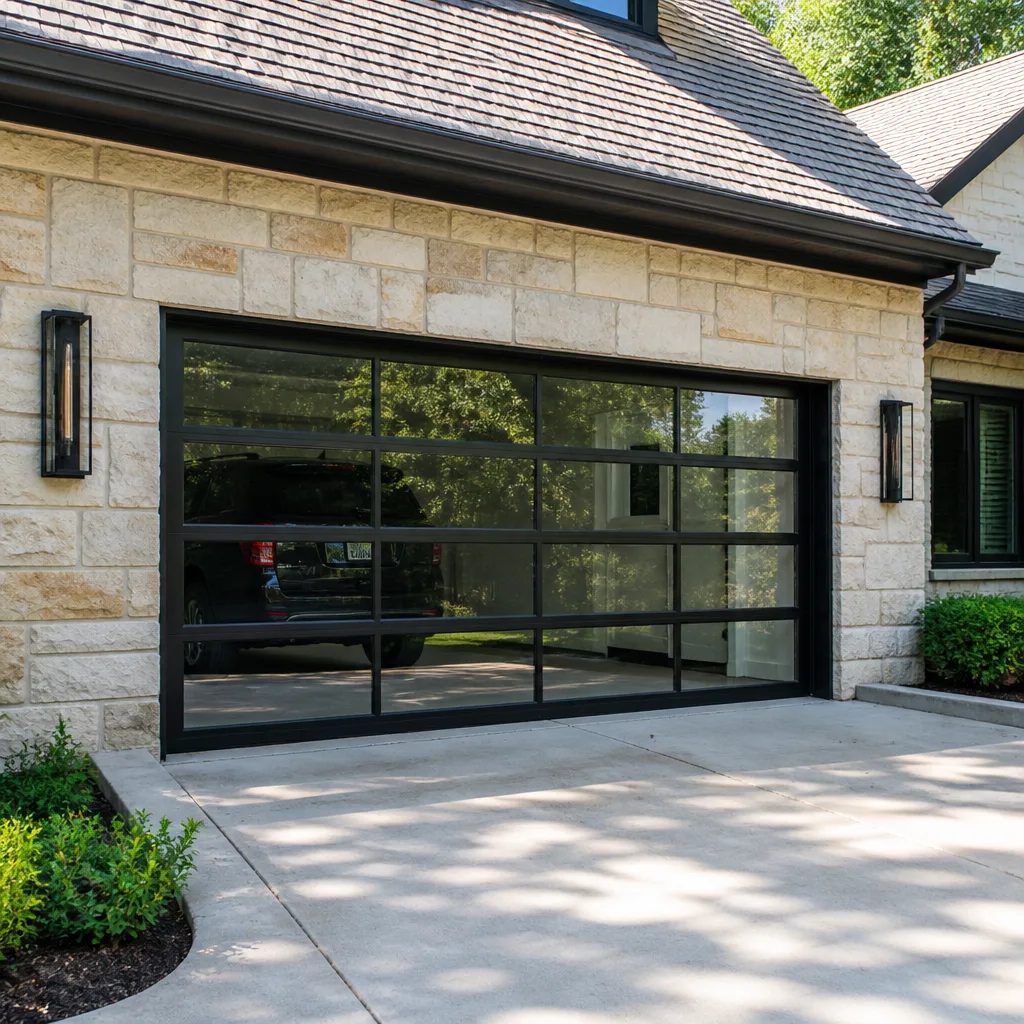 Full-view glass
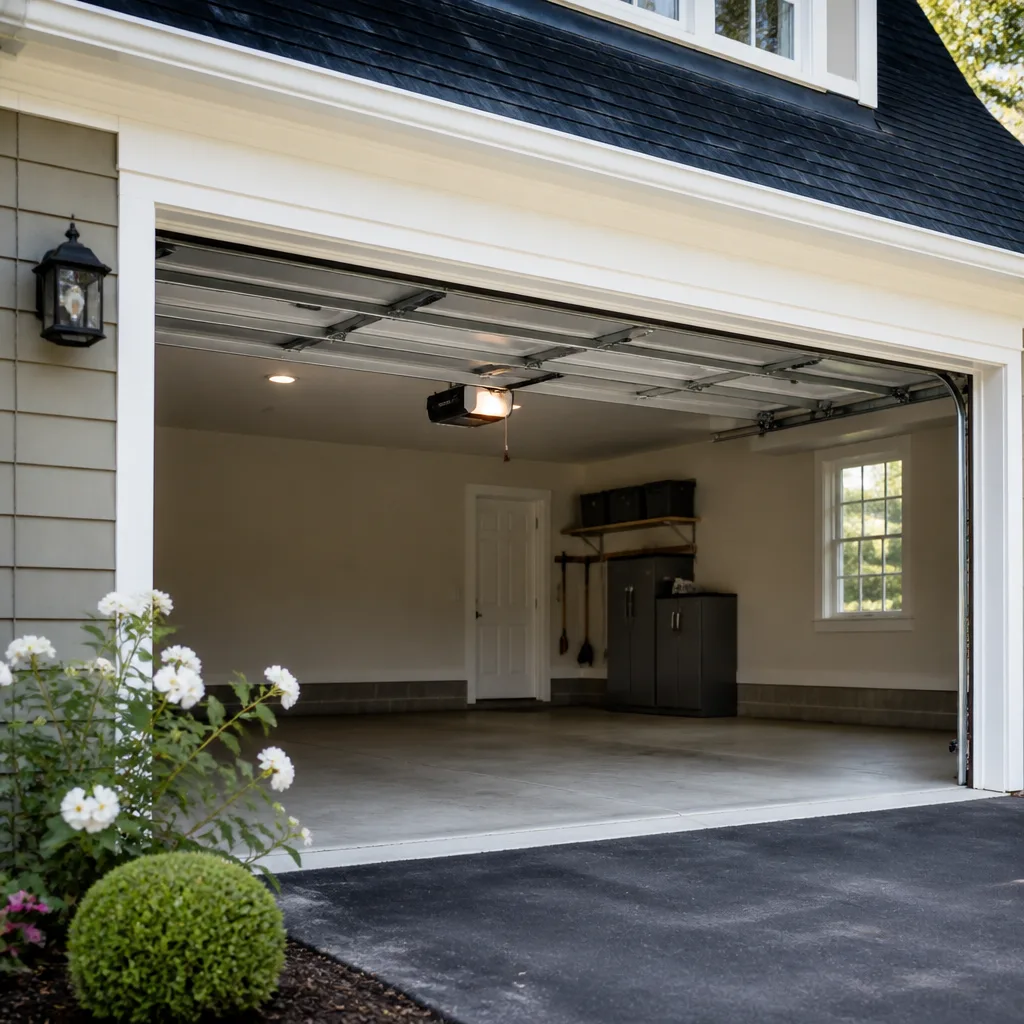 LiftMaster openers
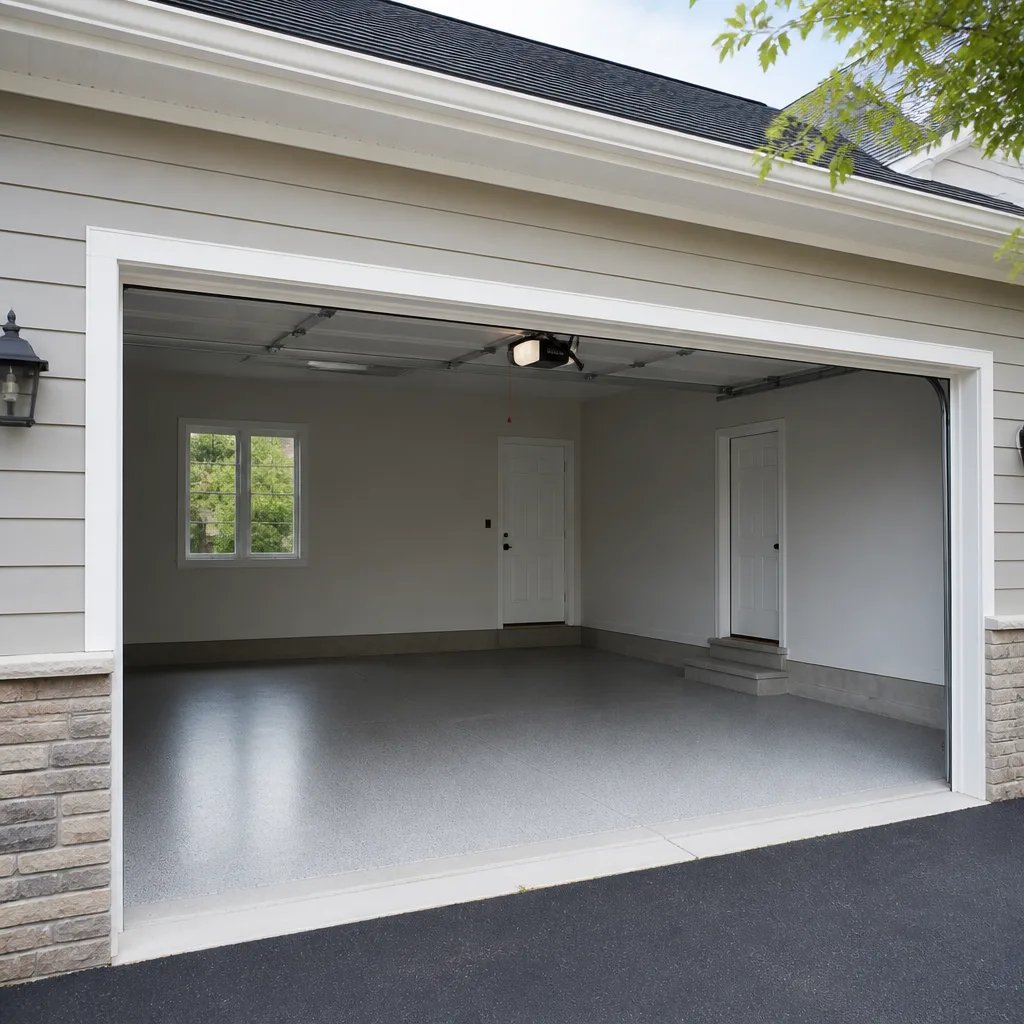 Chamberlain openers
Full 25-point door and opener safety check with every visit - springs, cables, rollers, tracks, and your LiftMaster or Chamberlain opener included
You get a price before we start. It does not change when the pro arrives.
Get your free estimateGarage Door Warning Signs: A Chesapeake Homeowner’s Reference Guide
Most garage door warning sign guides hand you a long list of symptoms and leave you to decide what matters. That’s the problem. A door that shudders on the way up and a door that reverses before it touches the ground can sound equally alarming in a list, but one can wait a week and the other shouldn’t wait until tomorrow. The gap between those two is where homeowners get into trouble: they panic-call over a normal squeak, then ignore a grinding noise that’s been building for three months. This guide fixes that by giving every common warning sign a clear severity tier and a decision rule. By the end you’ll know which sounds mean act today, which mean schedule this week, and which you can simply watch and log. We’ll cover the balance test, the four distinct door noises, and a few Chesapeake-specific corrosion signs that don’t show up in generic national guides.
Quick Answer
A garage door warning sign is urgent when it involves a sudden change in sound, a door that reverses or won’t close fully, or a snapped spring – those need a technician today. Persistent squeaks, rattles, and slow-drifting doors are usually monitor-and-log issues you can schedule within the week. The single most useful self-check is the balance test: a door that won’t hold its position more than two inches off the ground is telling you the springs are losing tension.
Styles & brands we work with
- Raised-panel steel
- Carriage house
- Modern flush
- Full-view glass
- LiftMaster openers
- Chamberlain openers
Table of Contents
- The Three-Tier Severity Framework
- Diagnosing Your Door by Sound
- The Balance Test: Your Best Self-Diagnostic
- Spring Warning Signs and Why They Matter
- Opener Behavior Flags
- Chesapeake Corrosion Signs
- Mechanical Safety Checks You Can Do Yourself
- When to Call a Professional
The Three-Tier Severity Framework
Every warning sign on this page gets sorted into one of three tiers. The tier tells you how fast to act, not how bad the problem is. A Watch and Log issue can become an Act Today issue if you ignore it long enough, which is the whole reason to write it down.
Tier 1: Act Today. The door does something that could hurt someone or leave your home open to the street. A door that reverses before closing, a door that won’t open at all, a snapped spring, a door hanging crooked from one side, or any grinding sound coming from the spring area. These are the cases where you call a technician now. If it’s a spring, stop using the door entirely and call (877) 419-7485. We answer 24/7. Fast dispatch from 7am to 7pm, Sunday through Friday.
Tier 2: Schedule This Week. The door works, but a component is clearly wearing. Persistent squealing, a door that hesitates at the same point in its travel, rollers that scrape the track, or an opener that runs but struggles. Book a repair within the next several days; the risk of a sudden failure is real but not immediate.
Tier 3: Watch and Log. Minor symptoms that are normal or cosmetic. A light rattle, a faint hum from the opener, a slow drift in door position over months. Write down the date you first noticed it, check again in two weeks, and call if it’s getting worse. This tier is where most homeowners waste a service call.
Here’s the rule that makes the framework work: any symptom that changes suddenly, or that appears on a door that’s been quiet for months, jumps up a tier. A grinding noise that’s been there since last year is Tier 2. The same noise starting yesterday is Tier 1. Sudden change is the signal.
Diagnosing Your Door by Sound
Most warning sign lists treat “noisy door” as one symptom. In our experience with the eight major brands we service – including LiftMaster, Chamberlain, Clopay, and Amarr – four distinct noises come from four different components, and mixing them up costs you money. Each one has its own cause and its own tier.
Grinding: Roller Wear
A grinding or scraping-rattle sound that tracks the door’s travel almost always points to worn or flat-spotted rollers. The roller stem has lost its smooth ride in the hinge, or the roller head has ground into the track. This is Tier 2. Worn rollers are cheap to replace and left alone they start multiplying the wear on the track itself. If the grinding is accompanied by the door visibly wobbling, Tier 1.
Popping: Spring Stress
A sharp pop or snap from the spring area, especially when the door starts to open, is the spring loading under tension. If it’s a single pop on one occasion, Tier 2. If it’s repeating or you see a gap in the coil, it’s Tier 1 – the spring is showing signs of failure and the door should stay down until a technician looks at it. This is the risk we treat most seriously.
Scraping: Track Misalignment
A sustained scrape along the full length of travel, distinct from the grinding of a worn roller, usually means the door or a roller is dragging on a track that has moved out of alignment. Track misalignment can drop the door if the roller escapes the channel. Tier 1 if the door is visibly off the track. Tier 2 if it’s scraping but still tracking.
Rattling: Loose Hardware
A loose rattle when the door moves points to hinges, bolts, or the opener’s chain and rail. It’s usually Tier 3 – an easy tighten-up. If the rattle accompanies a door that seems to shake, or comes from the spring anchor plate, treat it as Tier 2.
One more cue worth knowing: a hum from the opener with no door movement. That’s usually a stripped gear or a closed limit switch, not a dead motor. We check both before assuming you need a new opener.
The Balance Test: Your Best Self-Diagnostic
The balance test tells you whether your springs are still carrying their share of the door’s weight. It’s simple, repeatable, and the fastest way to know whether a creeping sound is a real problem. Do it from the ground with the door disconnected from the opener.
- Close the door fully and pull the emergency release cord so the door is on manual operation only.
- Lift the door to about waist height by hand and stop it.
- Let it go. A properly balanced door should hold position within an inch or so either way, without drifting.
- Check the halfway point by raising it to chest height and releasing again. The door should hold within two inches in either direction.
- Reconnect the opener by pulling the release cord back, then running the door one full cycle to confirm it re-engages.
What a drift means. A door that falls more than two inches from waist height is telling you the springs have lost tension. Fall ten inches and the springs are exhausted; that’s a Tier 1 and the door shouldn’t be cycling on the opener. A door that lifts itself upward after release points to overtensioned springs, also Tier 1, because the opener is fighting them and the wire cables are under extra load. Either way, the balance test is measuring spring condition, not opener condition. That’s the key insight most guides miss.
Run the balance test every six months. It takes about three minutes, costs nothing, and it’s the earliest warning sign you can get.
Spring Warning Signs and Why They Matter
Torsion and extension springs carry the weight of a door that can run several hundred pounds. When one fails, it typically fails all at once – a snap you hear from inside the house – and the door drops immediately. That’s why spring symptoms get the highest urgency tier of any component on your door. We treat a spring repair as one of the most technically demanding jobs on this equipment, and that’s why we don’t recommend inspecting or adjusting springs yourself. The tension in a wound spring is loaded and does not forgive a mistake.
Spring warning signs to know:
- A visible gap or separation in one coil of a torsion spring. Tier 1.
- A door that suddenly feels much heavier when operated by hand. Tier 1.
- A door that opens crooked or hangs lower on one side. Tier 1.
- A loud pop followed by the door refusing to lift. Tier 1 – the spring has likely snapped.
- Extension springs with a visible stretch or a bent hook at the end. Tier 2.
- Springs that look rusty along the coil. Tier 2 – rust weakens the coil over months, not days.
One structural fact worth knowing: a torsion spring is almost always paired with a second spring for balance. When one goes, both should be replaced together. The matched pair has done the same number of cycles and the surviving spring has very little life left. Replacing one alone is the exact shortcut we see behind most repeat spring failures. If a technician quotes you a single spring as the full fix on a two-spring door, ask why.
If you suspect a spring issue, stop cycling the door and call us at (877) 419-7485. We can have a technician at your door for a same-day repair, and the written estimate comes before any work starts, so you know the number before the door is touched.
Opener Behavior Flags
The opener is usually the first part of the system a homeowner blames for a door problem. Most of the time it’s the messenger, not the cause. There’s a clean way to tell the difference.
The hesitation flag. If the door hesitates, stalls, or pauses at the same point in its travel arc every single time, that’s a hardware problem, not a programming one. The opener is applying steady force to a door that is resisting at that point. A binding roller, a track that has shifted, a panel that’s out of square – all of those create a load the opener can’t push through. Clearing an opener’s travel limits doesn’t fix it. On LiftMaster and Chamberlain openers, the same-size-printed logic board and force limit settings get blamed repeatedly for hesitation points that turn out to be a roller or track problem. If the hesitation is on a Craftsman or Raynor opener, that’s no different.
What’s actually an opener issue:
- The door reverses immediately after starting to close, every time, no obstacle present. That’s a safety sensor or limit setting.
- The motor hums but the door doesn’t move, and manual operation is smooth. That’s usually a gear or drive issue.
- The opener runs but the door only moves a few inches. That’s the travel limit or the release cord needs re-engagement.
- The remote works intermittently. That’s a battery, a wall-mounted interference source, or an antenna, not the door.
If your door reverses before closing every time, treat that as Tier 1 even when nothing looks wrong. A reverse-before-close is the exact behavior that can precede a spring failure under full load. We treat it as a same-day call.
When the opener itself is the diagnosis, our garage door opener repair service covers the diagnosis and the fix. The written estimate sets the price before any part comes off the wall.
Chesapeake Corrosion Signs
Generic warning sign guides written for inland dry climates miss two corrosion checks that matter in Chesapeake. The humidity here and the road salt tracked in during the colder months both attack the door hardware in ways you can see if you know where to look.
Rust bleed from roller stems onto the track. Look at where each roller stem meets its hinge and where the roller rides inside the track channel. If you see a rust-colored stain bleeding along the track metal from the roller head, the roller is corroding from the inside. The roller will eventually seize, and a seized roller either grinds the track or forces the door out of alignment. Tier 2 – you have weeks, not months, to schedule it. Rust bleed is a Chesapeake pattern – a garage that gets humid air in summer and salt-laden moisture in winter pushes it along much faster than a dry climate would.
White efflorescence on the bottom rail aluminum. A powdery white bloom on the aluminum bottom rail, usually near the hinges or the threshold, is a corrosion reaction driven by road salt splashing up and drying on the metal. It’s not the same as chalk from sun exposure. It shows up on the underside of the rail and along the seams. Left alone, it becomes pitting and eventually eats the rail. Tier 2 on the aluminum itself, Tier 3 if you can wipe it off and it doesn’t return.
Both of these are worth checking with a flashlight every spring after the salt season ends and again in early fall before it starts. If either one is present, run a thumb over the roller or the rail seam. If it feels rough, book a repair. If it wipes clean, log the date and check again in a few months.
Mechanical Safety Checks You Can Do Yourself
These checks are observational. You’re looking for signs, not making adjustments. Anything involving the springs, the cables, or the opener’s internal force settings belongs to a trained technician, and we’ll say so plainly.
- Check the safety sensor beam. With the door fully open, stand in the door’s path and watch the sensor LEDs. Both should be lit steady. A blinking sensor means the beam is blocked or out of alignment, and the door shouldn’t close into a blocked beam. If the door does close with the sensor blocked, that’s Tier 1.
- Look at both cables. Torsion doors have a cable on each side. Check for fraying, kinks, or a cable that’s come off its drum. A frayed cable is Tier 1 – stop using the door.
- Look at the track along its full length for dents, gaps at the splice, or a roller that’s escaped the channel. Tier 1 if a roller is out.
- Run the balance test covered above.
- Check the hinges and bolts by hand for play. A loose bolt is a tighten-up, not a call-out. Don’t tighten with the door open and under tension.
- Run the door one full cycle and listen. Note the sounds that showed up today that weren’t there last month. That’s the record that drives the tier decision.
What we’re not going to give you is a set of instructions for adjusting the springs or cables. The tension on a wound spring is significant, and improper spring work is one of the leading causes of garage door injury and repeat failures. That’s not a scare line; it’s why spring repair is a specialty in the first place.
See the difference
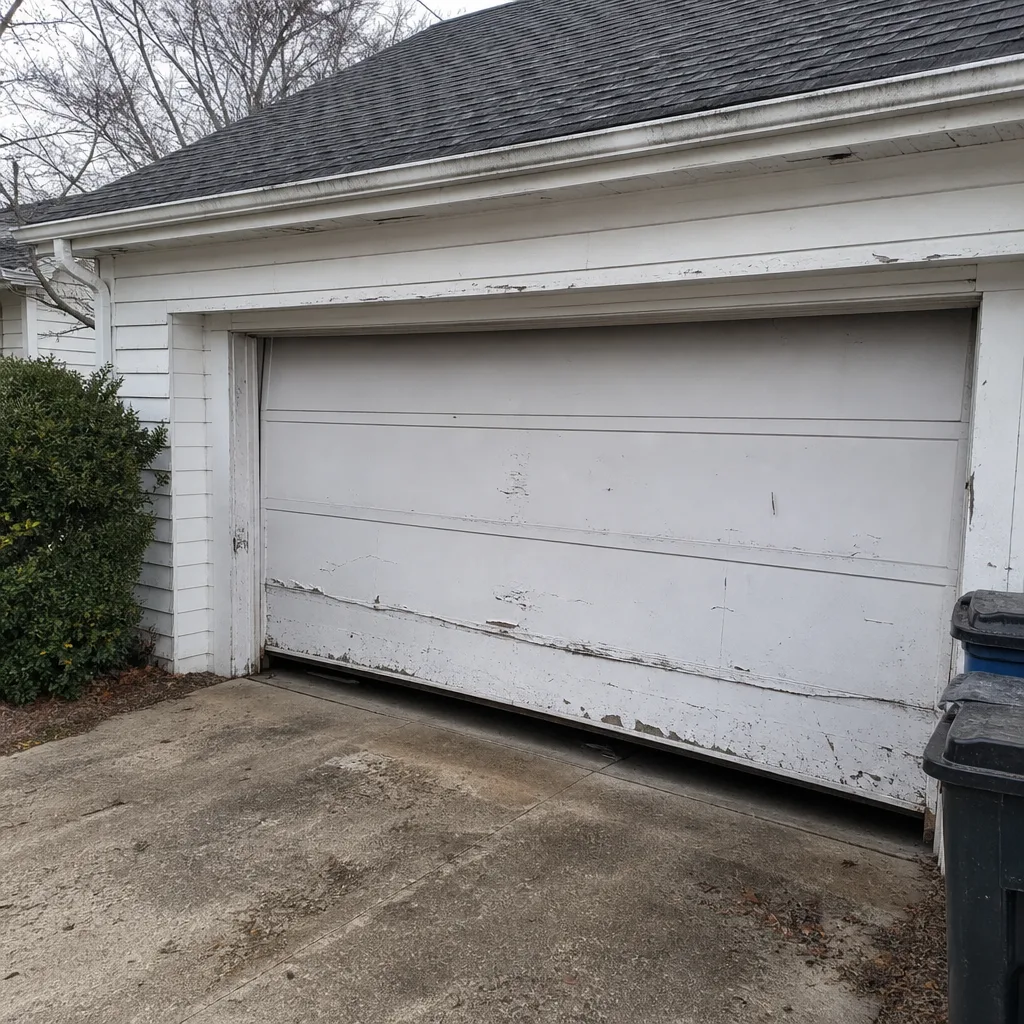 Before
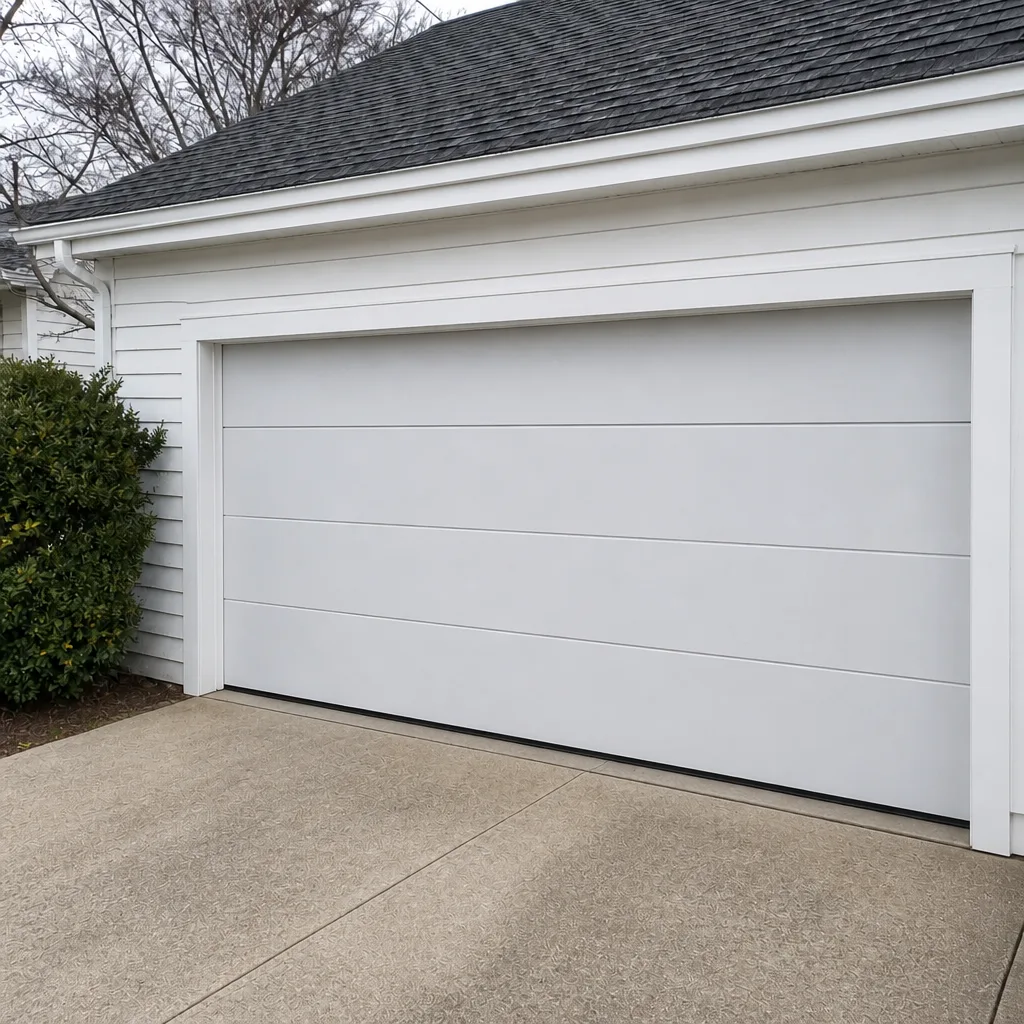 After
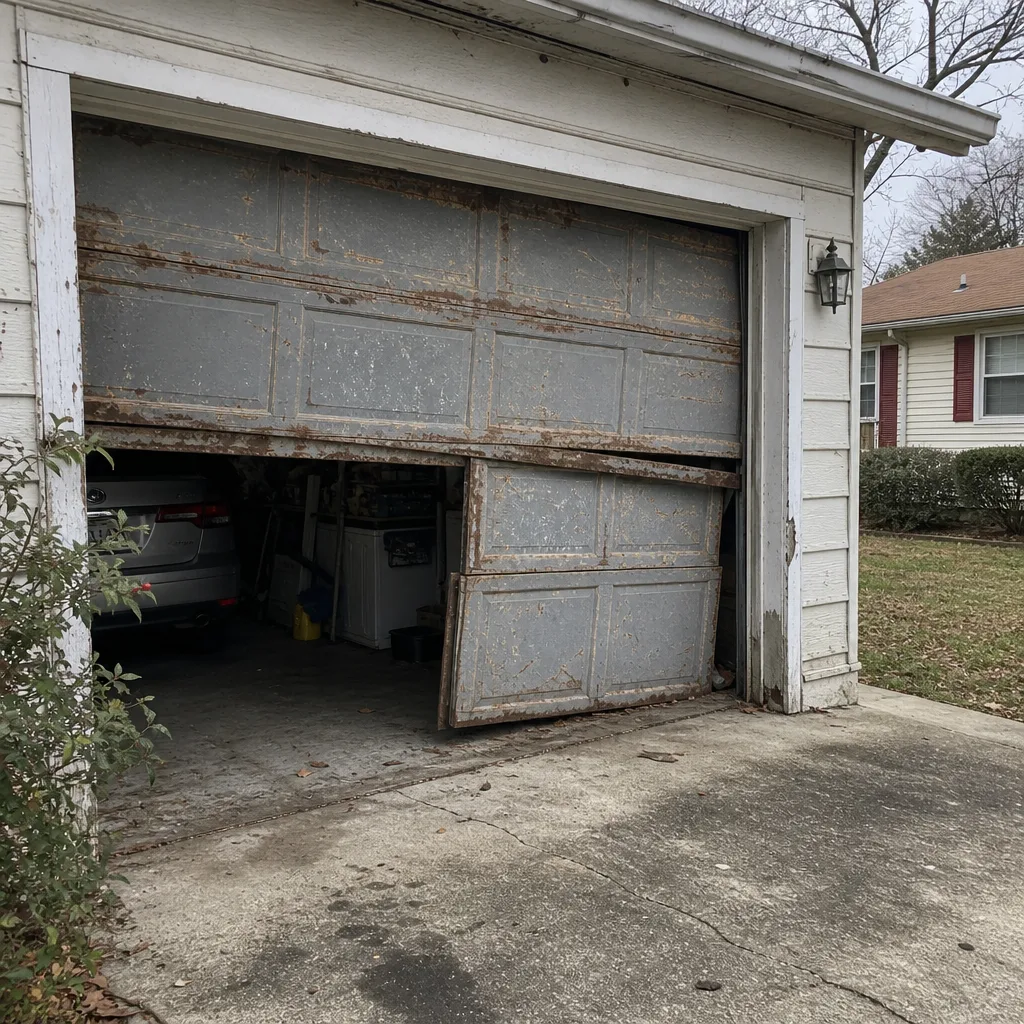 Before
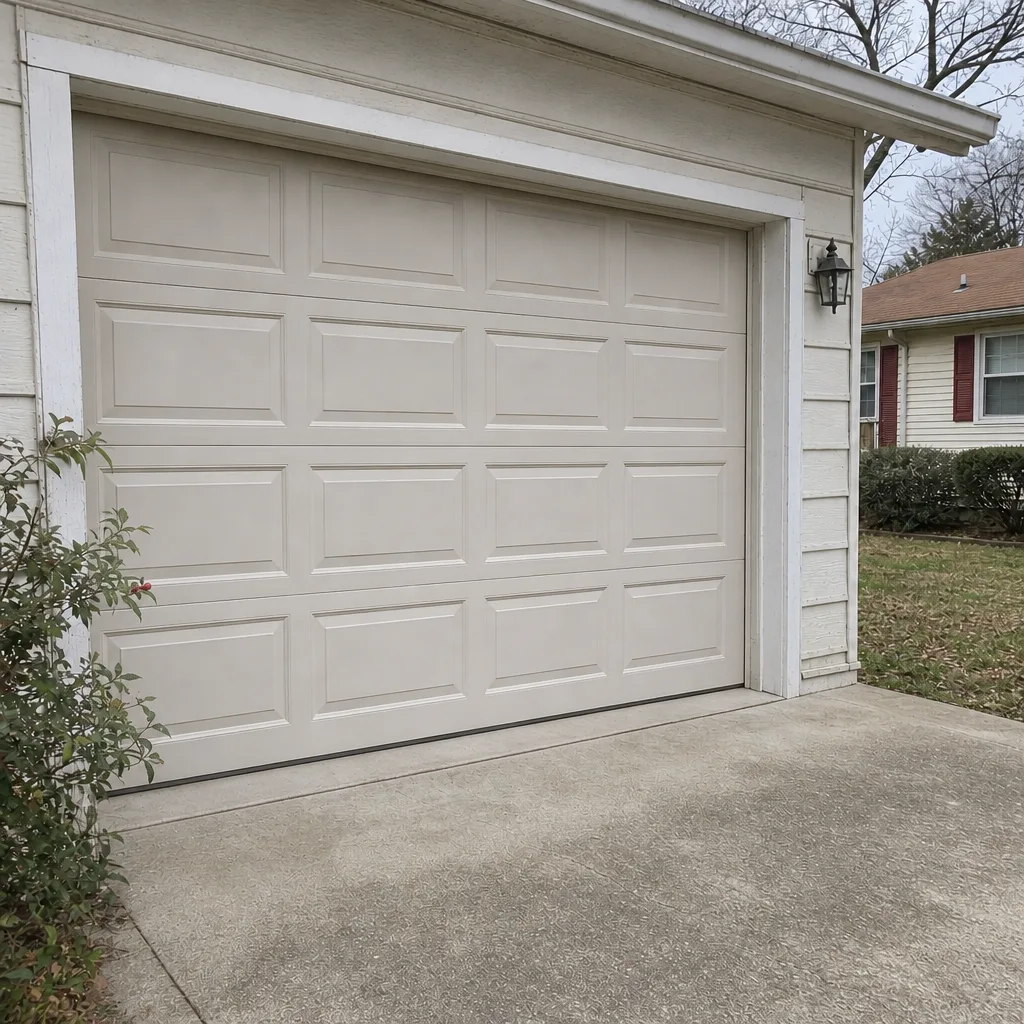 After
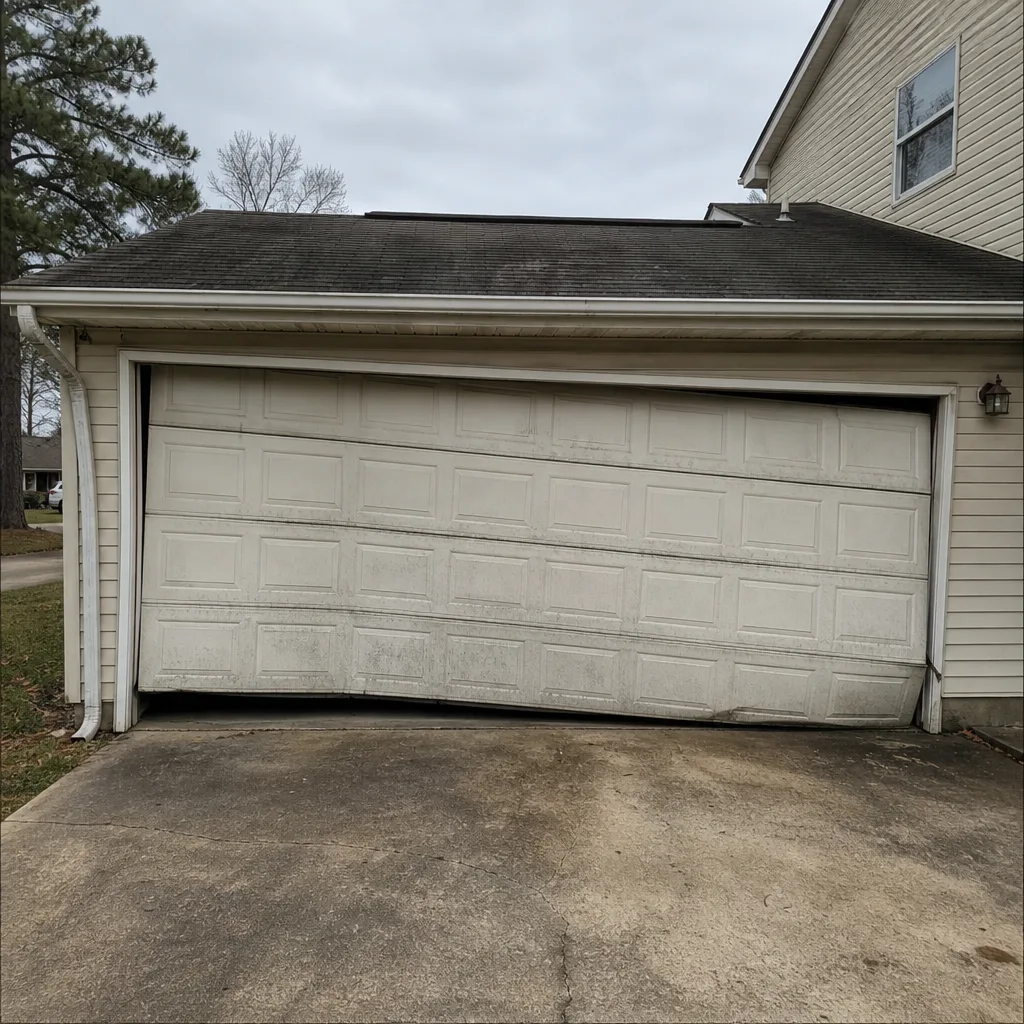 Before
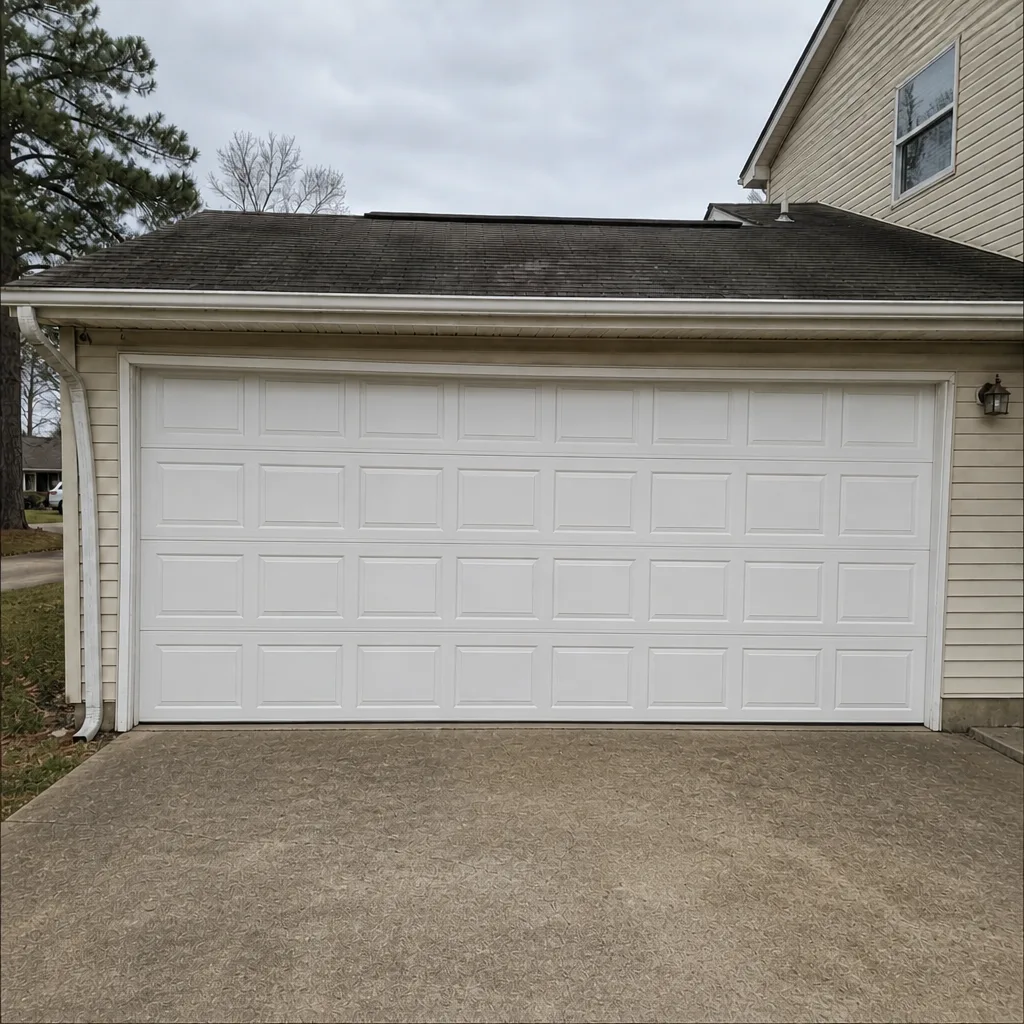 After
Common Mistakes to Avoid
- Treating every symptom as urgent. A light rattle isn’t a crisis. Calling on every minor noise means you’re paying for a service call twice a year instead of once, and you start doubting your own read on what matters. Use the three tiers.
- Ignoring a sudden change in behavior. The fastest signal is always the newest one. A door that’s been quiet and starts grinding this week is Tier 1, even if the noise itself sounds mild.
- Oiling aluminum tracks. Oil and lubricant on an aluminum track attracts dust and gum, which causes the exact roller stick you’re trying to fix. Clean the track and lubricate the roller stems instead.
- Replacing one spring on a two-spring door. The second spring has taken the same cycle count and is the more likely one to snap next. Replace the matched pair.
- Repairing the opener when the problem is on the door. If the door hesitates at the same travel point, the door is the problem. Clearing limits on the opener pushes the failure onto the next cycle.
- Assuming a reverse-before-close is the sensor. Sometimes it is. Sometimes it’s the door’s running load exceeding the opener’s safety reverse force, which points back to a binding door or a failing spring.
- Skipping the spring balance test because the door “feels fine.” A spring rarely announces itself before it goes. Three minutes, twice a year, tells you more about spring health than any other check.
When to Call a Professional
Call today for a snapped spring, a door that reverses before closing, a door that won’t fully open or close, a cable that’s come loose, a door hanging crooked, or any grinding sound from the spring area. Those are the signs where the next cycle can cause real damage. Call this week for persistent squeaks, a hesitation at the same travel point, rust bleed from the roller stems, a struggling opener, or a balance test drift over two inches. Watch and log the light rattle, the seasonal track noise, and the intermittent remote. If it’s been going on for two weeks and it isn’t changing, it’s Tier 2.
Our technicians have up to 9 years of experience across the brands we service – LiftMaster, Chamberlain, Genie, Clopay, Amarr, Wayne Dalton, Craftsman, and Raynor. When we recommend a repair, the price is written out and agreed before any part comes off. We work with your insurer when a repair is part of a claim. Free estimates are available for garage door repair in Chesapeake – call (877) 419-7485. We answer 24/7. Fast dispatch from 7am to 7pm, Sunday through Friday.
Frequently Asked Questions
A door that suddenly behaves differently is the most urgent sign – especially a grinding or popping sound from the spring area, a door that reverses before fully closing, or a door that suddenly feels much heavier to lift. Those symptoms point to spring stress, and a failing spring can drop the door under full load. Stop using the door and call for a same-day diagnosis. Call (877) 419-7485 – estimates are free.
No. A light rattle when the door moves is usually loose hardware or a chain swing, and it’s a Tier 3 watch-and-log issue. Grinding, popping, scraping, and sustained rattling are different sounds with different causes, and each one has its own severity tier in this guide. If the noise is new or getting louder, it’s worth a call.
Run the balance test: pull the emergency release, lift the door to waist height, let it go. If it drifts more than two inches off position, the springs have lost tension and they’re on their way out. A visible gap in a coil, a loud pop, or a door that opens crooked are also spring signs. Spring repair is not a DIY job – the tension is loaded and dangerous. Call for an inspection.
A hesitation that happens at the same point in the travel arc every single time is a hardware problem, not an opener problem. Something on the door is binding at that position – a worn roller, a shifted track, a hinge – and the opener is pushing through the load. Clearing the opener’s travel limits won’t fix it. That’s a Tier 2 call for garage door opener repair or door-level repair.
Typical spring repairs in this market run $180 to $340 per spring depending on the type and door weight, and a matched pair is usually replaced together, so expect roughly twice that for the pair. The written estimate sets the final price and is agreed before any work starts. Call (877) 419-7485 for an exact quote – estimates are free.
Replacing rollers and hinges is a homeowner-level task on a properly supported door, but if the door is currently under spring tension and you can’t secure it, the risk isn’t worth the saving. Once the roller stems are seized or the track is scraping, it’s a repair call. We can also tell you if the rollers need replacing or just cleaning.
Run the balance test and the visual safety checks every six months, and again after any season change. In Chesapeake, add a flashlight look at the roller stems and bottom rail after the winter salt season – rust bleed and white efflorescence on the aluminum are the two earliest signs that the hardware is corroding.
No. The written estimate is set after the technician inspects the door and is agreed before any work starts. If the diagnosis changes what’s needed, you’ll see the new price before you approve it. There are no hidden fees added after the fact. Call (877) 419-7485 to schedule.
The Bottom Line
The warning signs on your garage door aren’t equally urgent, and the right response depends on which tier you’re in. Sudden changes – grinding from the spring area, a reverse-before-close, a door that suddenly feels heavy – are today. Persistent wear – hesitation, rust bleed, a drifting balance test – is this week. Minor rattles and cosmetic noise are watch-and-log. The balance test is the single check to run twice a year, and spring symptoms should never be a DIY project. When you need eyes on the door, we work on the brand already installed – LiftMaster, Chamberlain, Genie, Clopay, Amarr, Wayne Dalton, Craftsman, and Raynor – and every price is written and agreed before work begins.
For a free estimate on repair, spring work, or a full new door, call Chesapeake Garage Door Repair Experts at (877) 419-7485. We answer 24/7. Fast dispatch from 7am to 7pm, Sunday through Friday. If you’re planning a replacement, our garage door installation team measures, orders, and installs – installed right, adjusted right, working right. You can also start with the team at Chesapeake Garage Door Repair Experts for the full service menu.
Written by the team at Chesapeake Garage Door Repair Experts.