
Last updated November 21, 2026
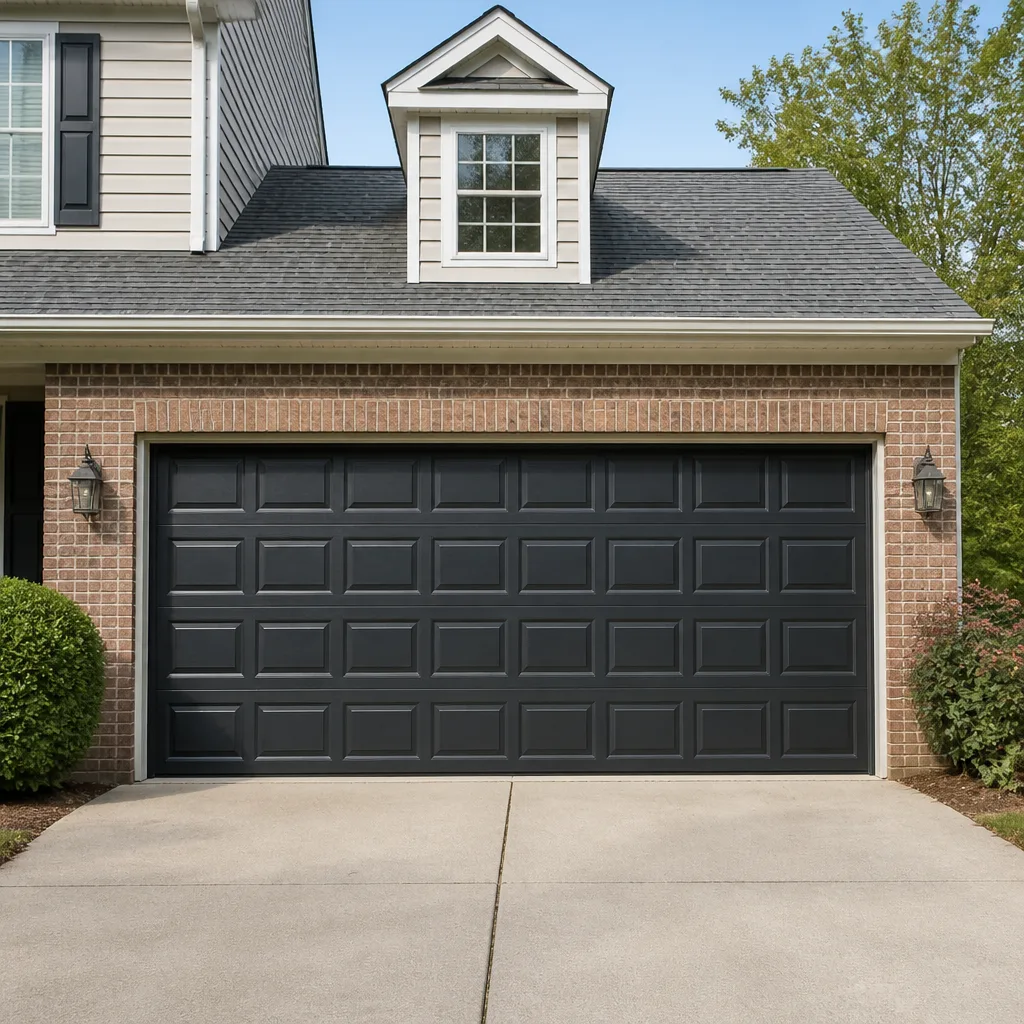 Raised-panel steel
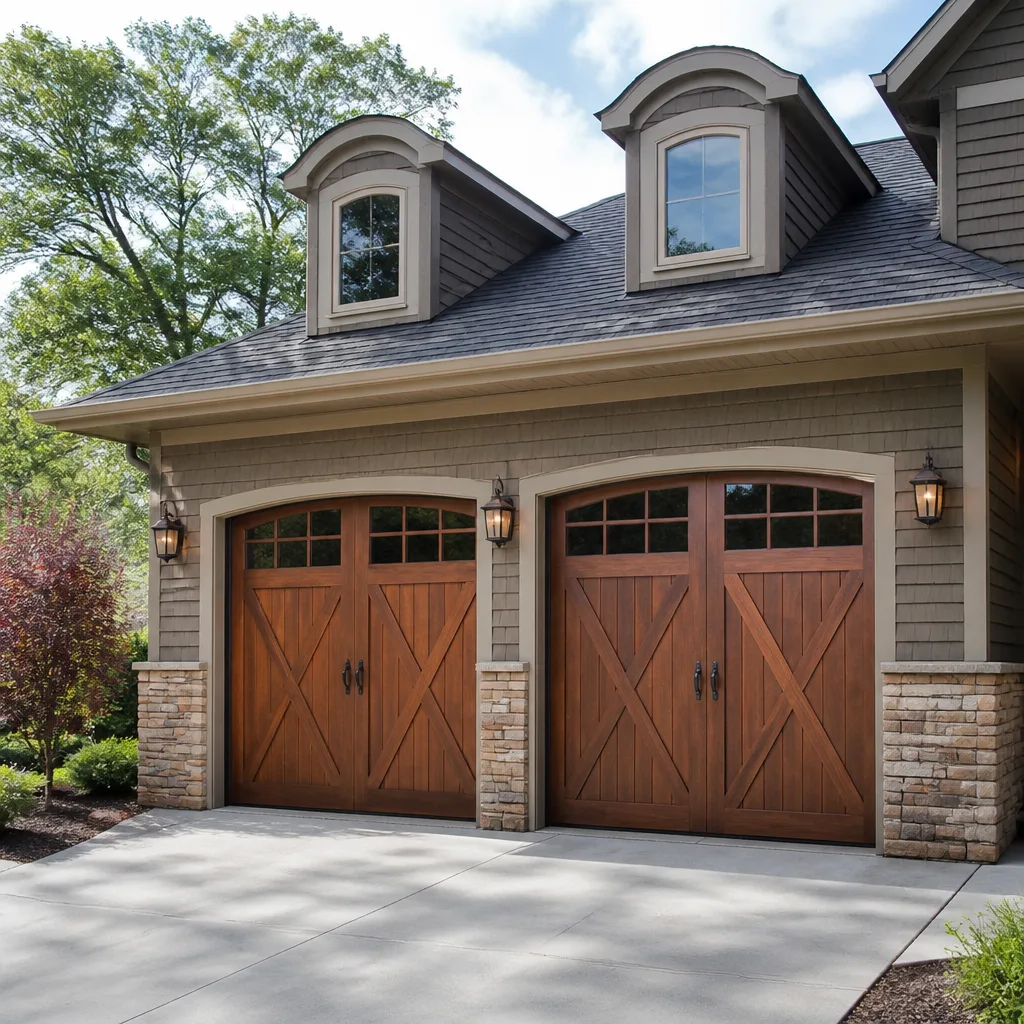 Carriage house
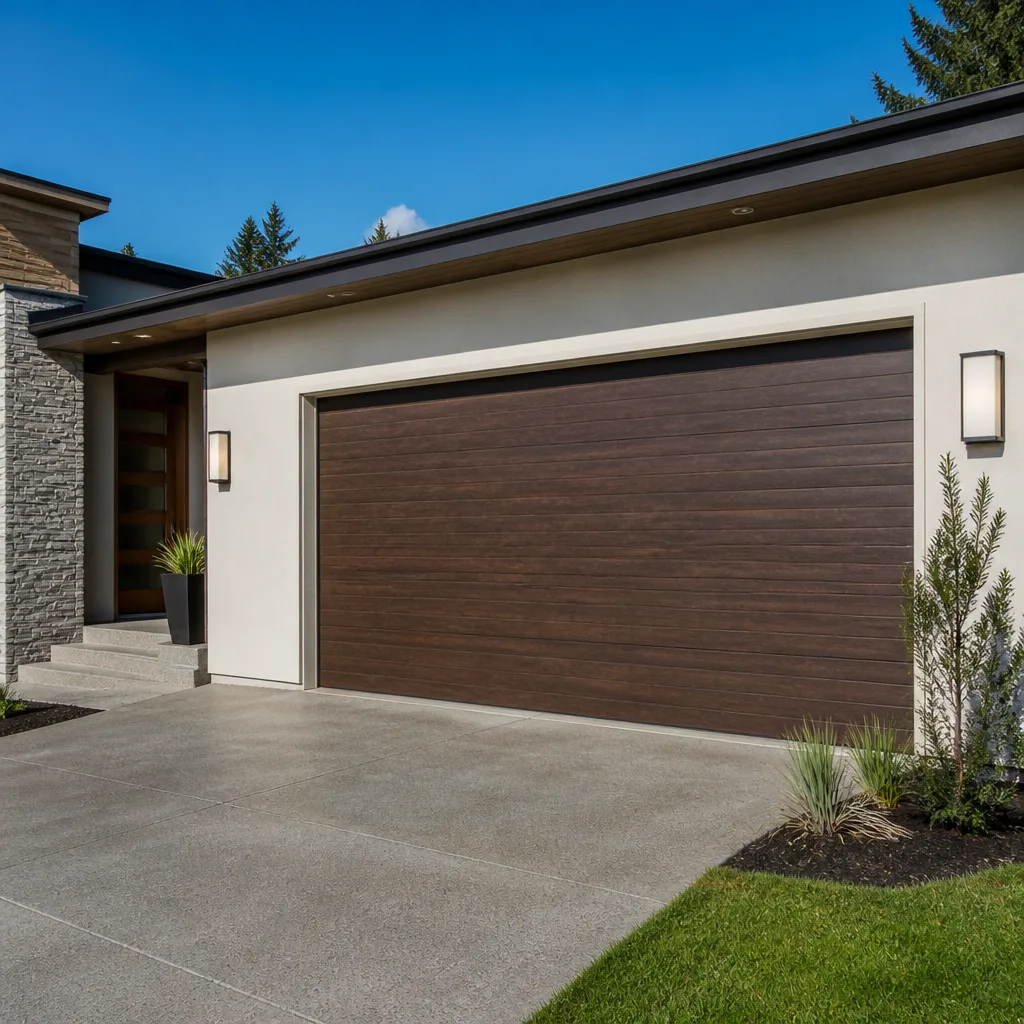 Modern flush
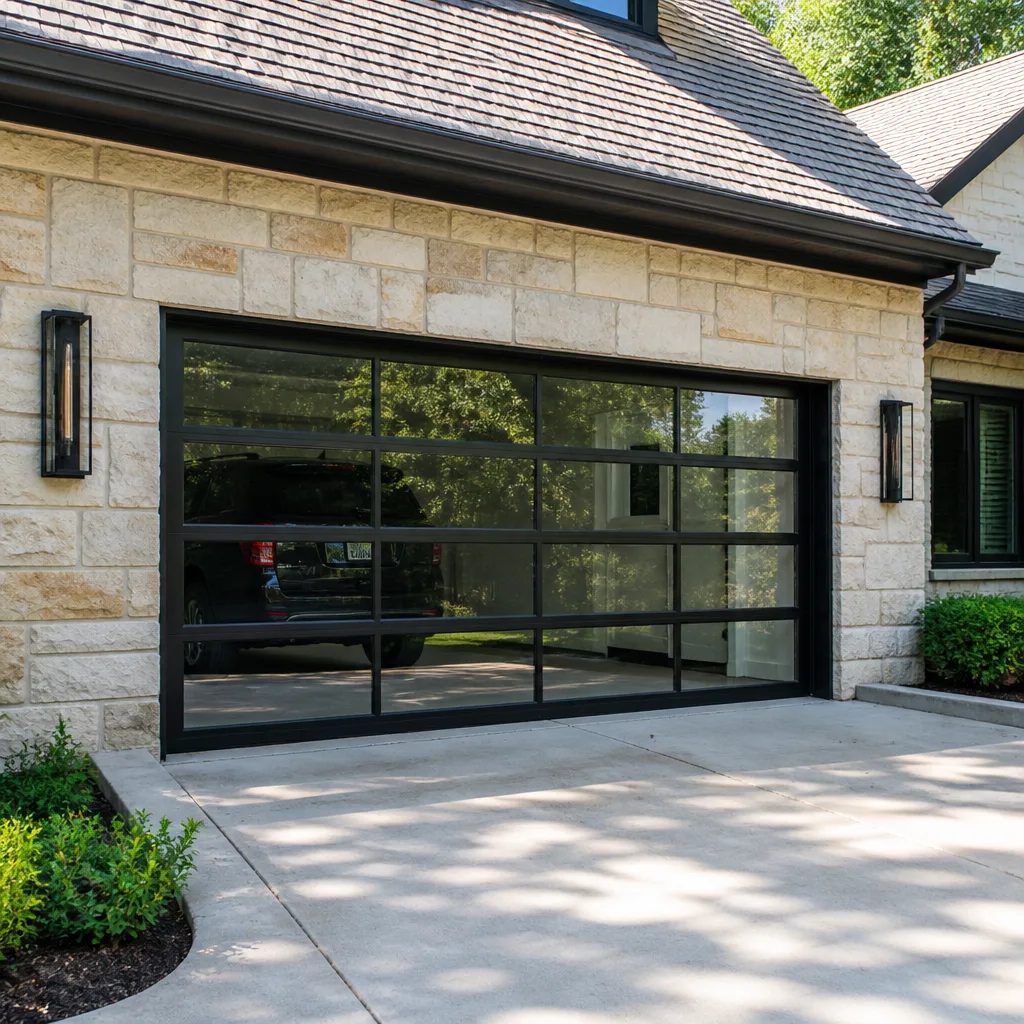 Full-view glass
 LiftMaster openers
 Chamberlain openers
Full 25-point door and opener safety check with every visit - springs, cables, rollers, tracks, and your LiftMaster or Chamberlain opener included
You get a price before we start. It does not change when the pro arrives.
Get your free estimateChoosing the Right Garage Door Brand: A Buyer’s Guide for Chesapeake
Most Chesapeake homeowners pick a garage door the way they pick paint: by color and price tag. That’s backwards. The brand you choose decides which parts are still available five years from now, how the steel holds up through a Hampton Roads summer, and whether the warranty actually covers you when rust starts creeping along the bottom section. Two doors can look identical on the showroom floor and behave nothing alike after a few humid seasons. In this guide you’ll learn how to read a brand on steel gauge, coating, insulation, warranty language, and how it pairs with your opener, so the door you buy in Chesapeake is the one that lasts.
Quick Answer
The best garage door brand in Chesapeake is the one whose steel gauge, coating system, and written warranty match this climate, not the one with the biggest logo or the lowest big-box price. For most homes here, that means a steel door with a heavier gauge or a genuine multi-layer coating, an insulation tier matched to your home’s heating and cooling loads, and a warranty that doesn’t carve out humidity or corrosion. Clopay, Amarr, Wayne Dalton, CHI, and Doorlink all build doors worth considering, but the specific model line matters far more than the brand name on the box.
Styles & brands we work with
- Raised-panel steel
- Carriage house
- Modern flush
- Full-view glass
- LiftMaster openers
- Chamberlain openers
Table of Contents
- A Brand-by-Brand Technical Breakdown
- Why Insulation R-Value Matters Differently in Chesapeake
- The Opener Ecosystem: Pairing Door and Opener Brands
- Steel vs. Aluminum vs. Fiberglass vs. Wood Composite
- What “Limited Lifetime Warranty” Actually Means
- A Step-by-Step Way to Choose Your Brand
- When to Call a Professional
- Frequently Asked Questions
A Brand-by-Brand Technical Breakdown
The brands sold in Chesapeake break into two camps: national names you’ll find at every home center, and regional manufacturers that sell mostly through dealers and installers. Both can build a solid door. The difference is in the details you don’t see until you read the spec sheet or a few years pass.
Clopay is the name most homeowners recognize. Their line runs from basic single-layer steel to insulated three-layer doors. The value in Clopay is model range and parts availability: hinges, rollers, and weather seals stay easy to source. The caution is that their cheapest lines use lighter steel and a single-layer build, which is fine for a detached shed but a poor fit for a Chesapeake home where the door faces the afternoon sun.
Amarr builds doors that hold up well in humid markets. Their insulated lines use a polyurethane or polystyrene core backed by a steel skin on both sides, which resists the panel flex that thin doors develop. Amarr’s warranty language is more generous than some competitors on paint finish, though you still need to read the corrosion section carefully.
Wayne Dalton is known for its insulated models and a wide color palette. Their higher tiers use a heavier-gauge steel and a baked-on finish, and their torsion systems are straightforward to service. If you want a specific look, Wayne Dalton may be your closest match without a custom order.
CHI and Doorlink sell mostly to the trade. Both are known for heavier steel and durable coatings at a mid-tier price. If you’re working with an installer who can source either, they’re worth asking about, especially for a north- or east-facing door that takes the worst of the weather.
In our experience across Chesapeake, the honest answer is that you can get a good or a bad door from any of these brands. The model line and the installation quality decide the outcome. That’s why we work on the brand already on your garage rather than steering you toward a single manufacturer.
Why Insulation R-Value Matters Differently in Chesapeake
Chesapeake doesn’t get the brutal winters of the upper Midwest, so insulation here is often framed as a heating question. That’s only half the story. This part of Virginia deals with hot, humid summers as much as cold snaps, and a garage door that faces the sun turns the space behind it into an oven if there’s no core to slow the heat transfer.
Here’s how to think about insulation tiers without getting lost in marketing:
- Single-layer steel (no core, lowest R-value): Cheapest, noisier, and the most prone to dents. Fine for a detached garage or a shed. Poor for an attached garage you use every day.
- Two-layer with polystyrene core (mid R-value): A reasonable middle ground. Lighter than polyurethane, less expensive, and enough to cut down on summer heat and panel rattle.
- Three-layer with polyurethane core (highest R-value): The best insulator per inch, stiffer panels, quieter operation, and the strongest resistance to denting. This is what we suggest for a garage under living space or next to a finished room.
The key point: in Chesapeake you’re insulating against heat gain and humidity as much as against cold. A door’s R-value doesn’t do much on its own if the perimeter seals are worn. An insulated door with a bad bottom seal leaks more air than a plain door with good seals. Before you spend extra on a higher R-value, check that the door frame, bottom seal, and sides are tight.
The Opener Ecosystem: Pairing Door and Opener Brands
Your garage door and your opener are two systems that have to work together, and the brand pairing matters more than most people realize. The door’s weight and balance determine how much lift your opener needs to provide. The opener’s design determines which safety sensors, remote controls, and smart-home integrations are available to you later.
For openers, three brands dominate Chesapeake garages: LiftMaster, Chamberlain, and Genie. All three make reliable belt- and chain-drive units, and all three support safety-reversing sensors that modern doors require. The key differences are in parts availability and app support.
- LiftMaster is the pro-installer favorite. Parts are easy to source, and their smart features are well supported.
- Chamberlain is closely related to LiftMaster and often cheaper at retail. The motors are similar; the electronics and app experience differ.
- Genie makes reliable belt-drive openers and is common in older Chesapeake homes. Some older models use proprietary parts, so check before you commit.
Pairing principle: you don’t need the same brand on the door and opener, but you do need a matched lift capacity. A heavy insulated door on an undersized opener is a common cause of early opener failure. When you buy, confirm the door’s weight and the opener’s rated lift are in proportion. Then decide whether smart-home features (Wi-Fi, voice control, battery backup) are worth the upgrade.
If you’re keeping an existing opener and swapping the door, an opener that already has a safety sensor and a working auto-reverse is fine for a lighter door. For a heavier replacement, it’s worth a conversation about whether your current opener can handle the new weight. If you need help, we handle garage door opener repair on all three major opener brands, including safety-sensor and remote-pairing issues.
Steel vs. Aluminum vs. Fiberglass vs. Wood Composite
Material choice is the second-most important decision after brand, and in Chesapeake it interacts directly with the humidity and heat. Here’s how each material holds up here, with honest lifespan expectations.
Steel. The most common and the most practical choice. Two-layer and three-layer steel doors are stiff, dent-resistant when insulated, and easy to paint or replace components on. In Chesapeake’s humidity, the weak spot is the bottom section where moisture collects. A galvanized or coated steel door with a proper bottom seal lasts 15 to 25 years here with routine maintenance. Lighter single-layer steel in a sunny spot may show dents and surface rust much sooner.
Aluminum. Lightweight, rust-proof, and ideal for a humid climate. The downside is that thin aluminum dents more easily than steel. A pan-style aluminum door is great for a modern look; a full-raise aluminum door can be noisy. Expect 15 to 20 years in this climate.
Fiberglass. Won’t rust and won’t dent easily, but UV exposure can yellow and chalk the surface over time. Fiberglass works well on a garage that doesn’t face the sun. Lifespan here is roughly 15 to 20 years, but plan on refinishing.
Wood composite. The closest thing to a real wood look without the rot risk. Engineered products resist moisture better than solid wood, but joints still need sealing. Expect 15 to 25 years in Chesapeake with regular care, less if the door isn’t sheltered.
The short version: steel with a good coating and a solid bottom seal is the best all-around choice for most Chesapeake homes. Aluminum is the best fit for the most humid spots. Wood composite is the look-first option that needs maintenance. If you’re working out which door fits your opening and how your existing track and springs interact with a heavier replacement, our garage door repair team can assess what’s already installed before you shop.
What “Limited Lifetime Warranty” Actually Means
Here’s a phrase that gets a lot of mileage: “limited lifetime warranty.” It sounds like the manufacturer stands behind the door forever. In practice, it usually means one specific part is covered for as long as you own the door, while everything else has a shorter window.
Here’s what to look for in the fine print across the major brands:
- What’s covered for “lifetime”: Usually the steel sections or the torsion spring, and often only for the original purchaser of the door. It rarely covers labor.
- What’s covered for a set number of years: Paint finish, hardware, and sometimes the spring are covered for 1, 3, or 5 years. Ask for the exact number.
- What’s excluded outright: Corrosion from humidity or salt, damage from storms, improper installation, and modifications are commonly excluded. Read the exclusion list before you buy, not after.
- Whether the door is warranted for a humid climate: Some brands are written for inland markets and exclude corrosion damage. In Chesapeake, that matters, so ask what the warranty says about humidity and finish.
- Who honors it: A brand warranty is usually honored through an installer or dealer. Keep your purchase and installation records; they’re what you’ll need if you ever file a claim.
Our honest take: the warranty language on a heavier-gauge, multi-layer door is usually more generous than on the cheapest line, and that tells you something. The manufacturer that’s willing to cover the finish in a humid market has more confidence in its coating. When a brand’s warranty lists corrosion exclusions up front, that’s a signal to ask about the coating, not a reason to walk away. The written estimate you get from an installer should spell out what the door warranty covers and what it doesn’t. That’s more useful than the brochure headline.
A Step-by-Step Way to Choose Your Brand
Here’s a practical sequence that keeps you from picking on color alone. It works whether you’re replacing a door yourself or buying through an installer.
- Measure the opening and the headroom. Note the door width and height, the space above the opening, and the side clearance. That decides which models even fit and whether you can use standard tracks or need a low-headroom setup.
- Decide the insulation tier based on use. Detached garage or shed: single-layer is fine. Attached garage used daily: two-layer with polystyrene. Garage under living space or next to a finished room: three-layer with polyurethane.
- Pick the material for your exposure. Sunny south or west face: steel with a good coating or aluminum. Heavily shaded north face: the same, with attention to the bottom seal. Wood composite only if you accept maintenance.
- Read the warranty. Check the corrosion and humidity sections specifically, and ask what’s covered for a set number of years versus “lifetime.”
- Confirm the opener pairing. Match the door’s weight to your opener’s rated lift, and confirm your safety sensors work. If you’re upgrading the door, ask whether the existing opener can handle the new weight.
- Get a written estimate that spells out installation. The estimate should list the model, gauge, insulation, hardware, and whether old-door removal and disposal are included.
- Ask about parts availability. Hinges, rollers, seals, and springs should be easy to source for your chosen brand. A door that’s hard to get parts for is a future headache.
When you’re ready to move from research to a real number, we install doors from all the brands we service, and our garage door installation process includes a free measure and a written price before any work starts. Installed right, adjusted right, working right means the door you pick today doesn’t turn into a service call next year.
See the difference
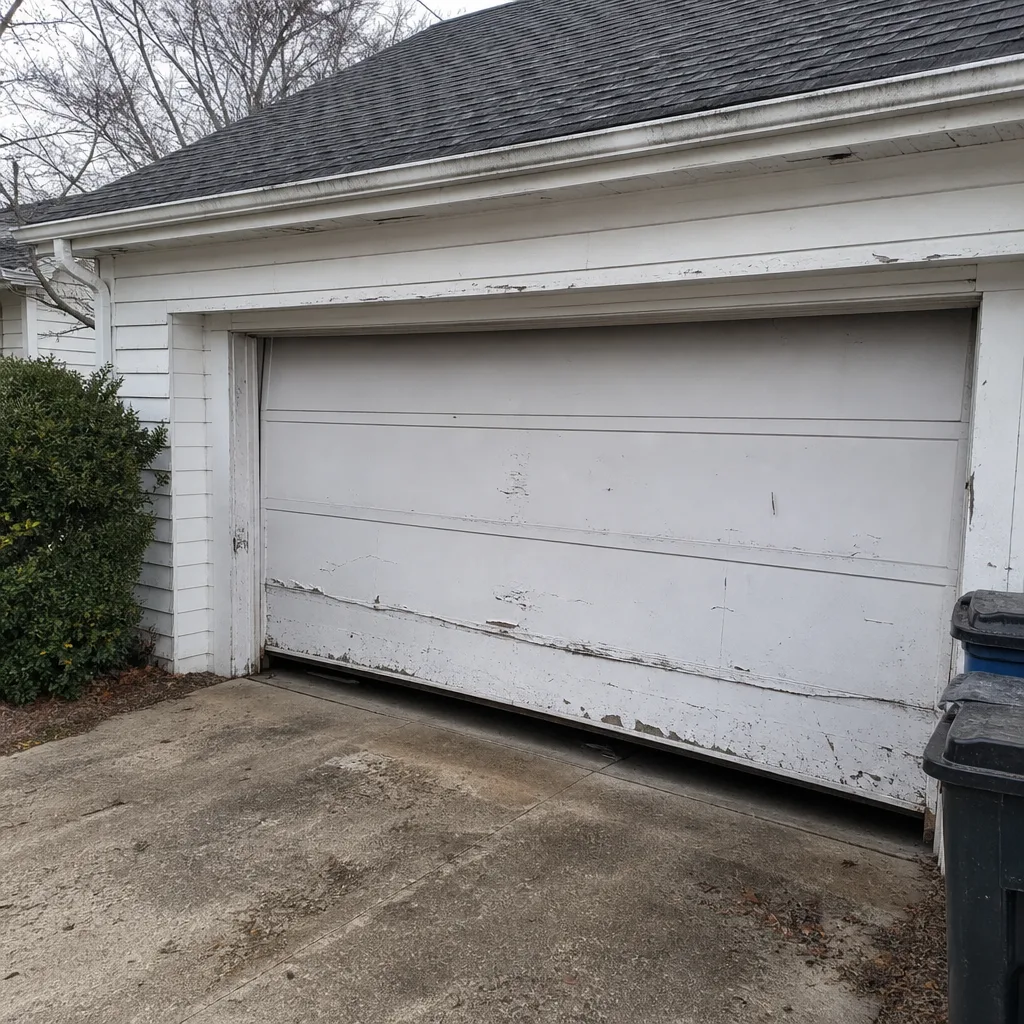 Before
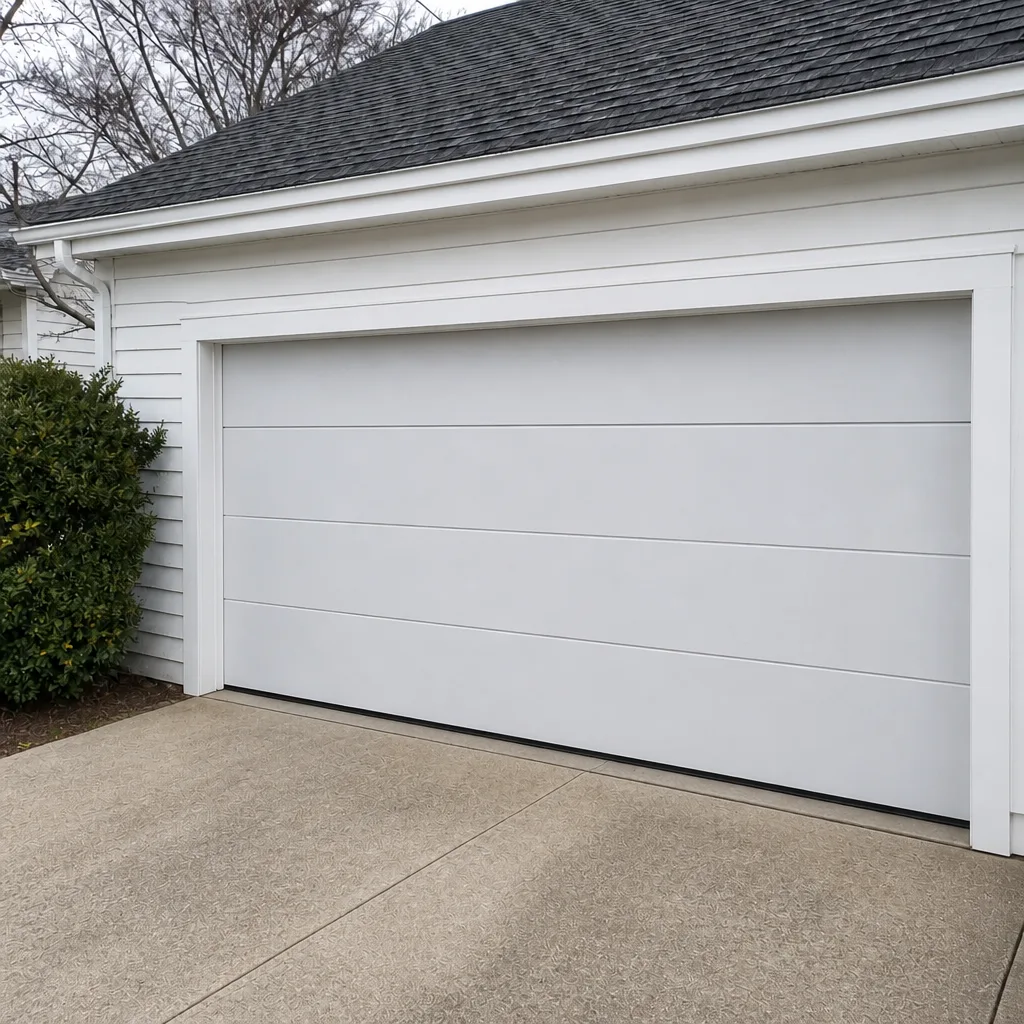 After
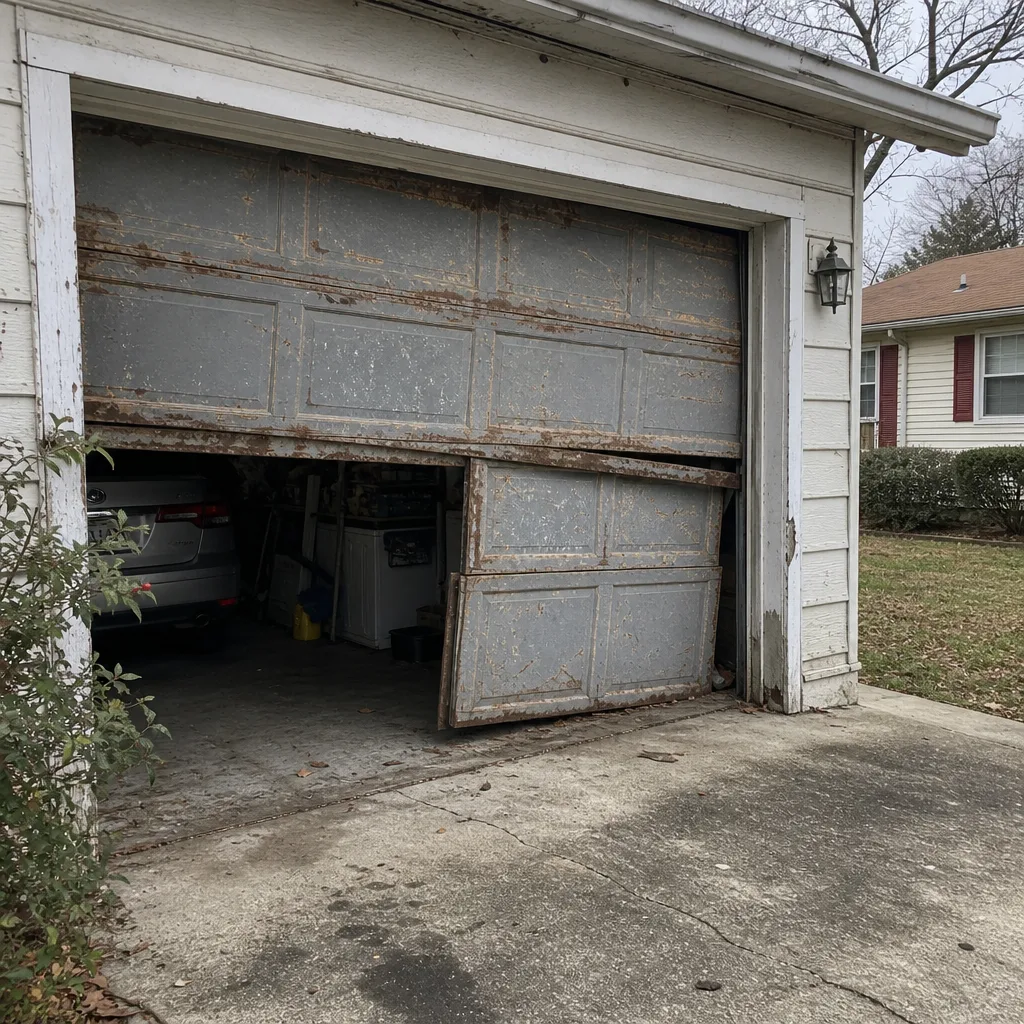 Before
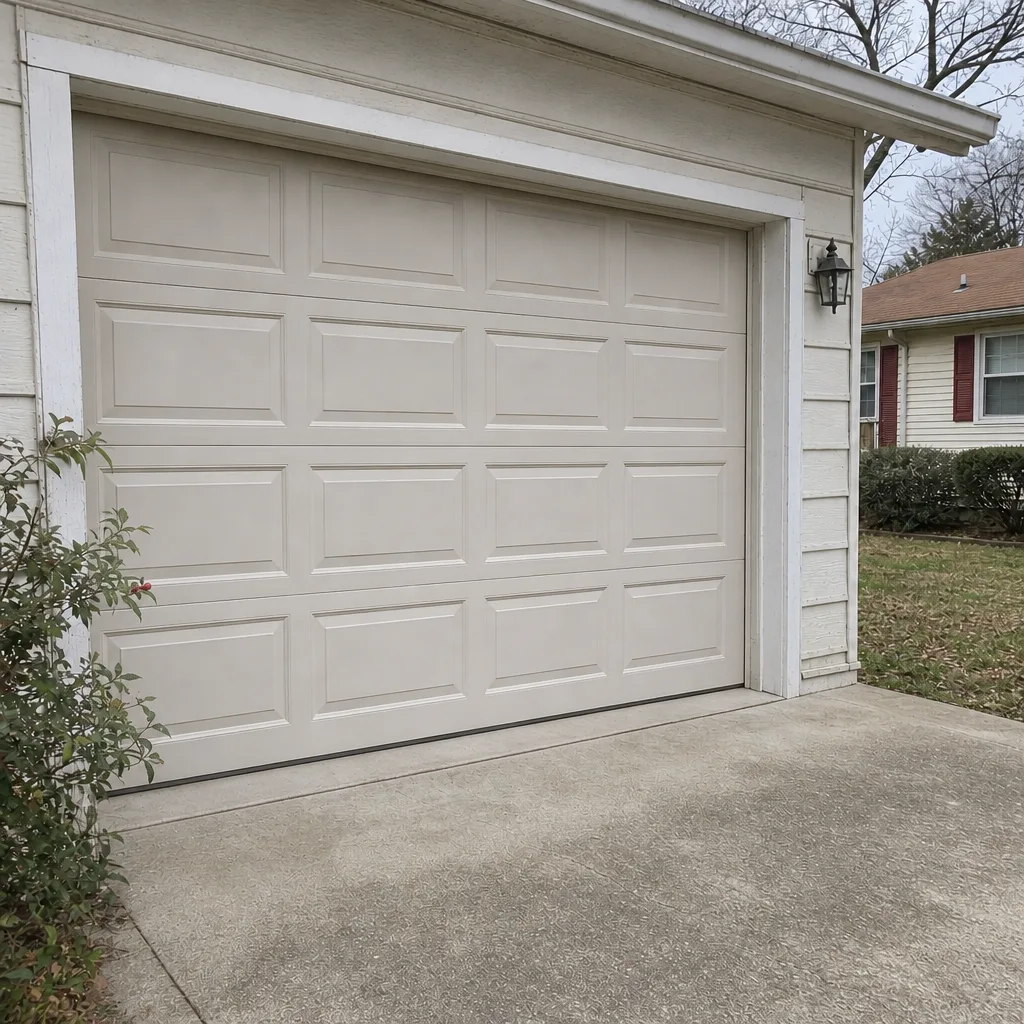 After
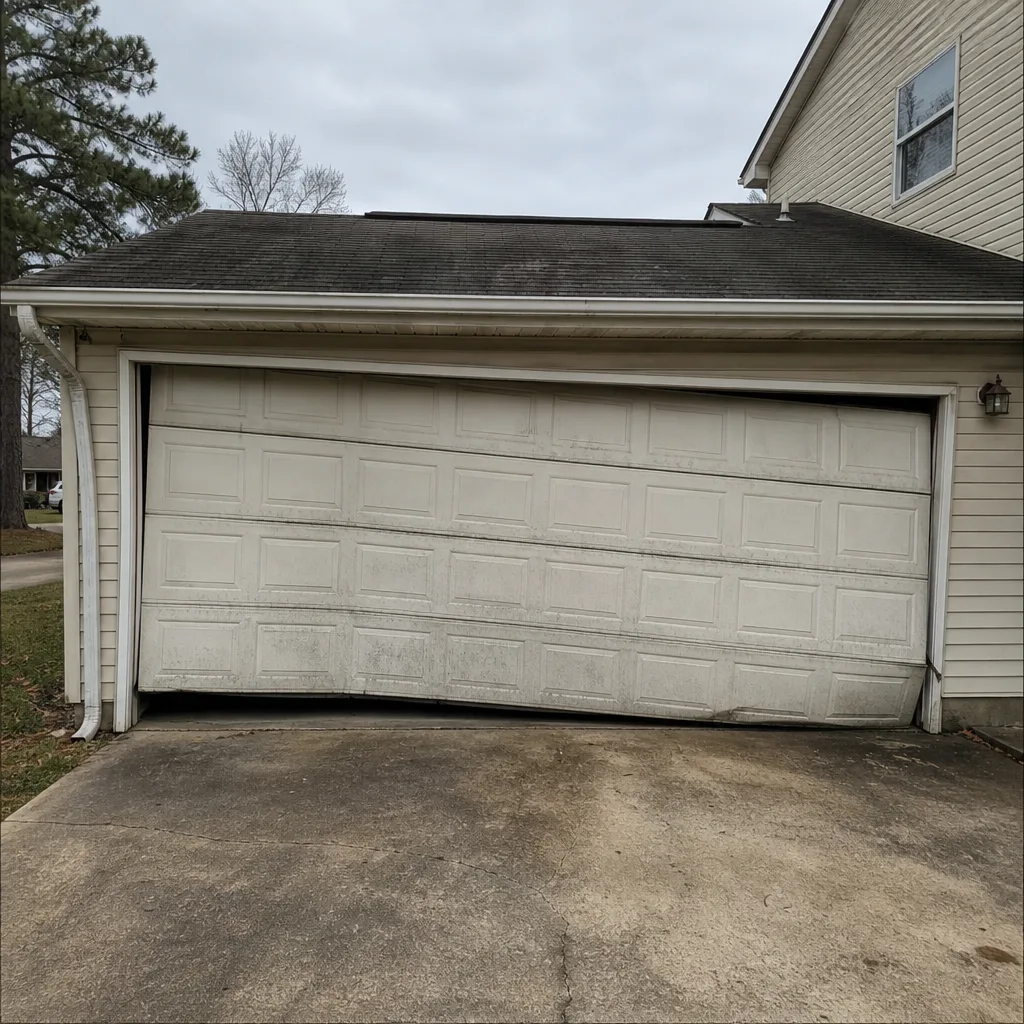 Before
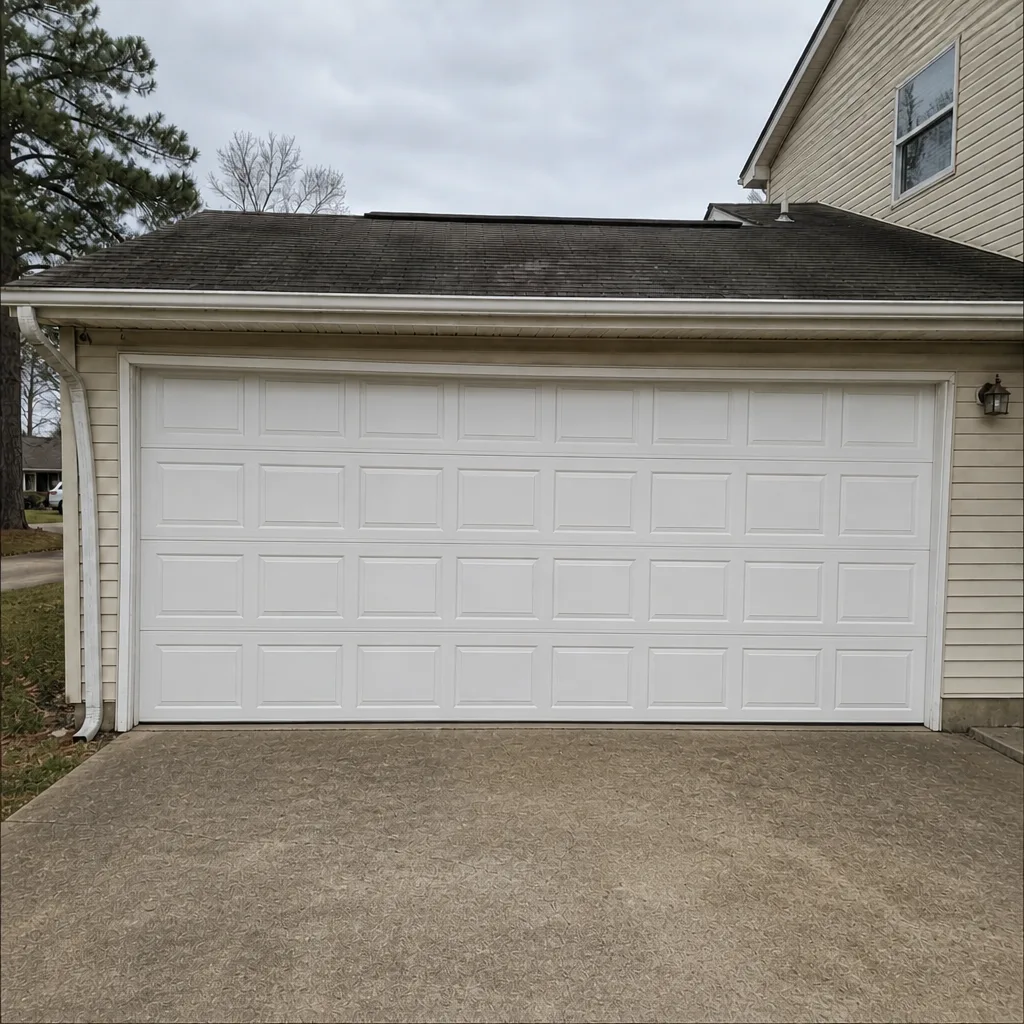 After
Common Mistakes to Avoid
- Buying on price alone at the big-box store. The cheapest door on the shelf often uses the lightest steel gauge and the thinnest coating. In Chesapeake’s humidity, that’s the door most likely to show rust and dents first.
- Skipping the warranty fine print. A “limited lifetime warranty” that excludes corrosion is barely a warranty in a humid market. Read the exclusions before you pay, not after.
- Mismatching the door weight and opener capacity. A heavy insulated door on an undersized opener fails early. Check the rated lift before you commit.
- Ignoring the bottom seal and frame. The best-insulated door leaks air if the bottom seal is worn or the frame is loose. Seal the perimeter before you spend on a higher R-value.
- Picking a material that doesn’t match the exposure. A single-layer steel door on an unshaded south-facing wall takes a beating. Aluminum or a heavier coated steel is better there.
- Assuming the brand name guarantees quality. Every big brand has a value line and a premium line. The model, not the logo, determines how the door performs.
- Forgetting that installation quality decides the outcome. A well-made door installed out of square or with the wrong spring tension will rattle, bind, and fail early. The installer matters as much as the brand.
If you’re unsure which of these mistakes you’re at risk of, a quick conversation is worth more than another hour of browsing. Call (877) 419-7485. We answer 24/7. Fast dispatch from 7am to 7pm, Sunday through Friday. Estimates are free, and the written estimate sets the final price.
When to Call a Professional
Some decisions are yours to make: the brand, the color, the material. Others belong to a trained technician. Call a professional if any of these are true:
- Your garage door won’t open or close, or stops partway and reverses. That’s often a safety sensor, track, or spring issue, and it can leave you locked out.
- You hear a loud bang from the garage and the door won’t lift. That’s usually a torsion spring failure, and it’s one of the most dangerous garage door jobs there is. Don’t try to move the door or touch the springs yourself; call a trained technician.
- You’re replacing a door and your existing opener or track may not handle the new weight.
- The bottom section is rusting or the door is sagging, which points to a balance or coating problem worth diagnosing.
- You want a written estimate that covers the model, installation, and warranty terms.
Springs, openers, panels, tracks: name the problem. We service LiftMaster, Chamberlain, Genie, Clopay, Amarr, Wayne Dalton, Craftsman, and Raynor equipment, so we work on the brand already on your garage. Chesapeake Garage Door Repair Experts offers free estimates in Chesapeake. Call (877) 419-7485. We answer 24/7. Fast dispatch from 7am to 7pm, Sunday through Friday. When your door won’t move, we will.
Frequently Asked Questions
There’s no single best brand for every Chesapeake home. Clopay, Amarr, Wayne Dalton, CHI, and Doorlink all make doors worth considering, and the right pick depends on the model line, steel gauge, insulation tier, and warranty terms. Match the door to your exposure and use, and the brand becomes a secondary question. Call (877) 419-7485 for a free estimate that compares options for your opening.
Yes. Chesapeake’s humid summers make corrosion resistance and finish quality more important than in drier markets. Look for heavier-gauge steel, a genuine multi-layer coating, and warranty language that doesn’t exclude humidity damage. A door built for an inland climate can underperform here. That’s the single most overlooked factor when homeowners shop in Chesapeake.
The door and opener brands don’t have to match, but their capacities do. LiftMaster, Chamberlain, and Genie are the openers we see most in Chesapeake, and any of them works well with Clopay, Amarr, Wayne Dalton, CHI, or Doorlink doors as long as the opener’s rated lift matches the door’s weight. Confirm safety sensors work and the opener can handle a heavier door before you upgrade. Call (877) 419-7485 if you’re unsure.
A new garage door is priced per job by a written estimate, so we don’t quote a single number before seeing your opening, the model, and the installation. A free measure and estimate is the right first step. Call (877) 419-7485. We answer 24/7. Fast dispatch from 7am to 7pm, Sunday through Friday. Estimates are free, and the written estimate you receive sets the final price.
Often you can, but it depends on the new door’s weight and your opener’s rated lift. A lighter door on a working opener with good safety sensors is usually fine. A heavier insulated door may need a stronger opener or a spring adjustment. Have a technician confirm the pairing before you commit; it’s cheaper than replacing the opener later.
It usually excludes corrosion, storm damage, improper installation, modifications, and labor, and it often runs only for the original purchaser. Paint finish and hardware are commonly covered for a set number of years rather than for life. Read the corrosion and humidity sections before you buy, and ask your installer to spell out the warranty terms in the written estimate. Call (877) 419-7485 for a free estimate and a plain-language explanation of what’s covered.
The Bottom Line
Picking a garage door brand in Chesapeake is a climate decision dressed up as a style decision. Steel gauge, coating, insulation tier, and warranty language matter more than the logo on the box. Match the material to your exposure, choose the insulation tier based on how you use the space, pair the door and opener by weight and capacity, and read the fine print on every “lifetime” claim. Do that, and the brand on your door becomes a detail you can live with for 15 years or more. The door between you and your home deserves a specialist, not a generalist. Call (877) 419-7485 for a free estimate.
Still deciding? Our team at Chesapeake Garage Door Repair Experts handles new installation, repair, and opener work across the brands we know best, so you can talk through the options with someone whose job is doors, not a general handyman trying to figure out the system in front of them. Our technicians have up to 9 years of experience. For a free measure and a written price, call (877) 419-7485. We answer 24/7. Fast dispatch from 7am to 7pm, Sunday through Friday.
Written by the team at Chesapeake Garage Door Repair Experts.