
Last updated November 21, 2026
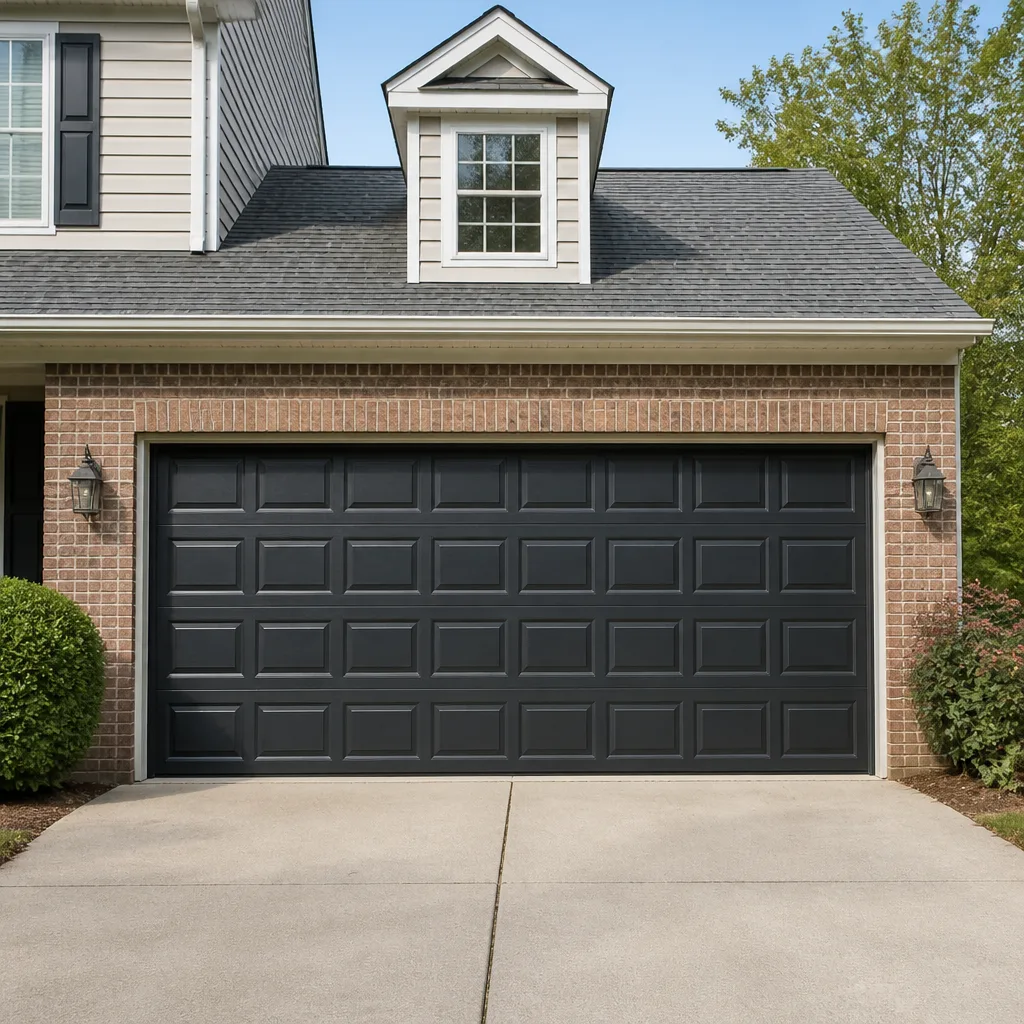 Raised-panel steel
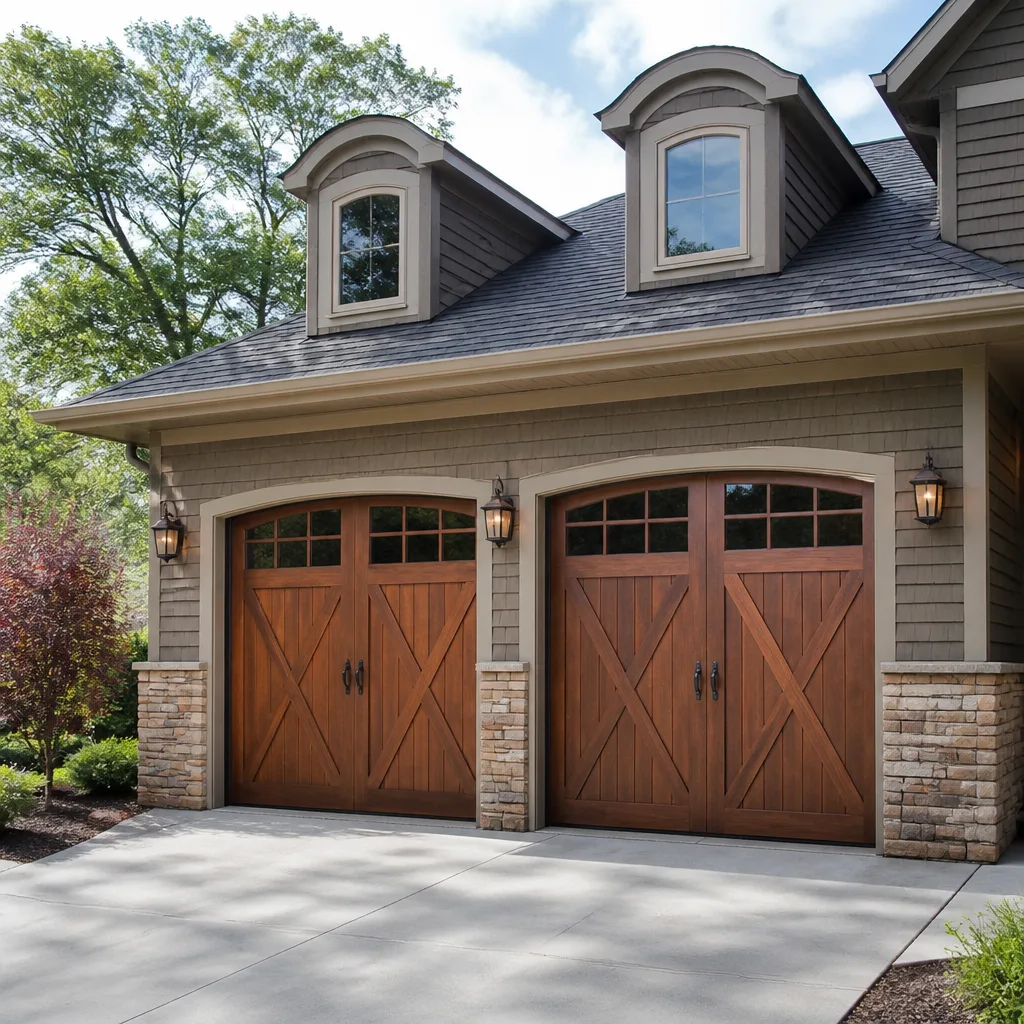 Carriage house
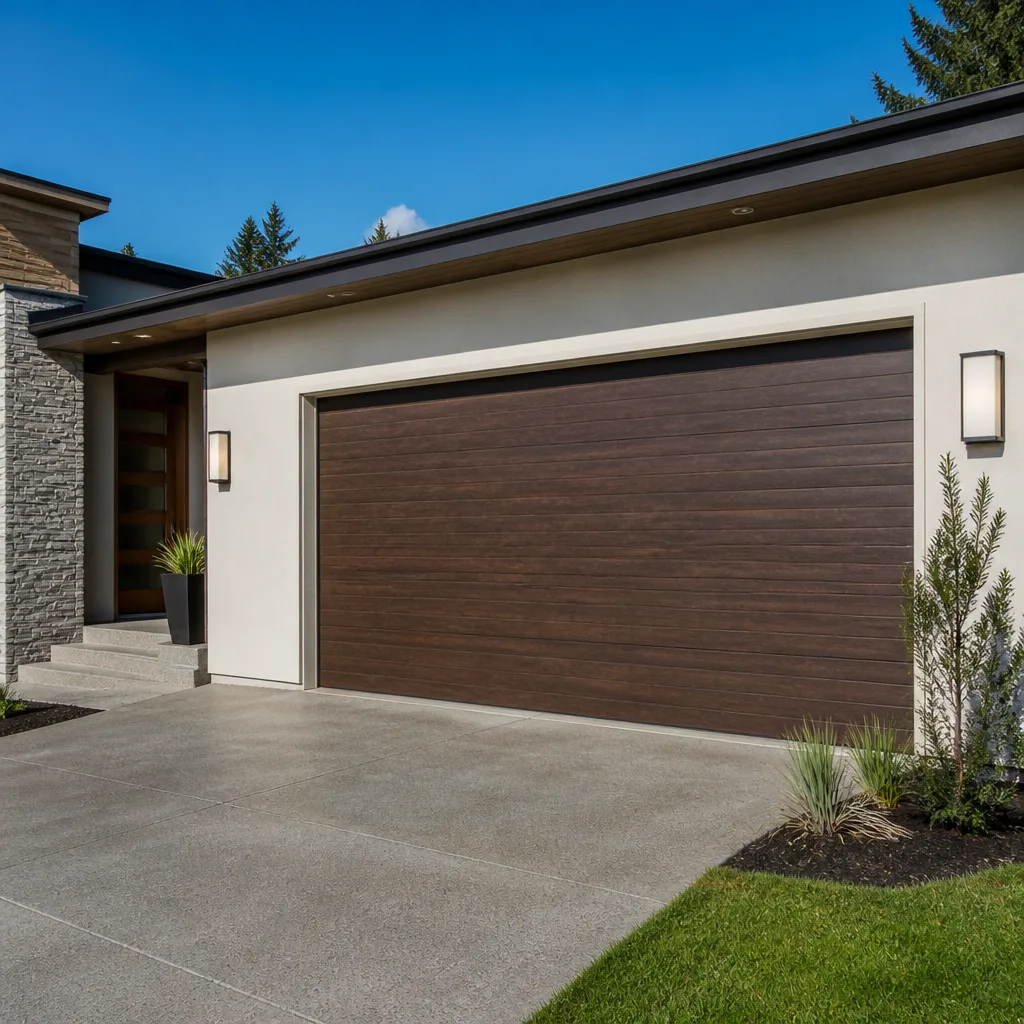 Modern flush
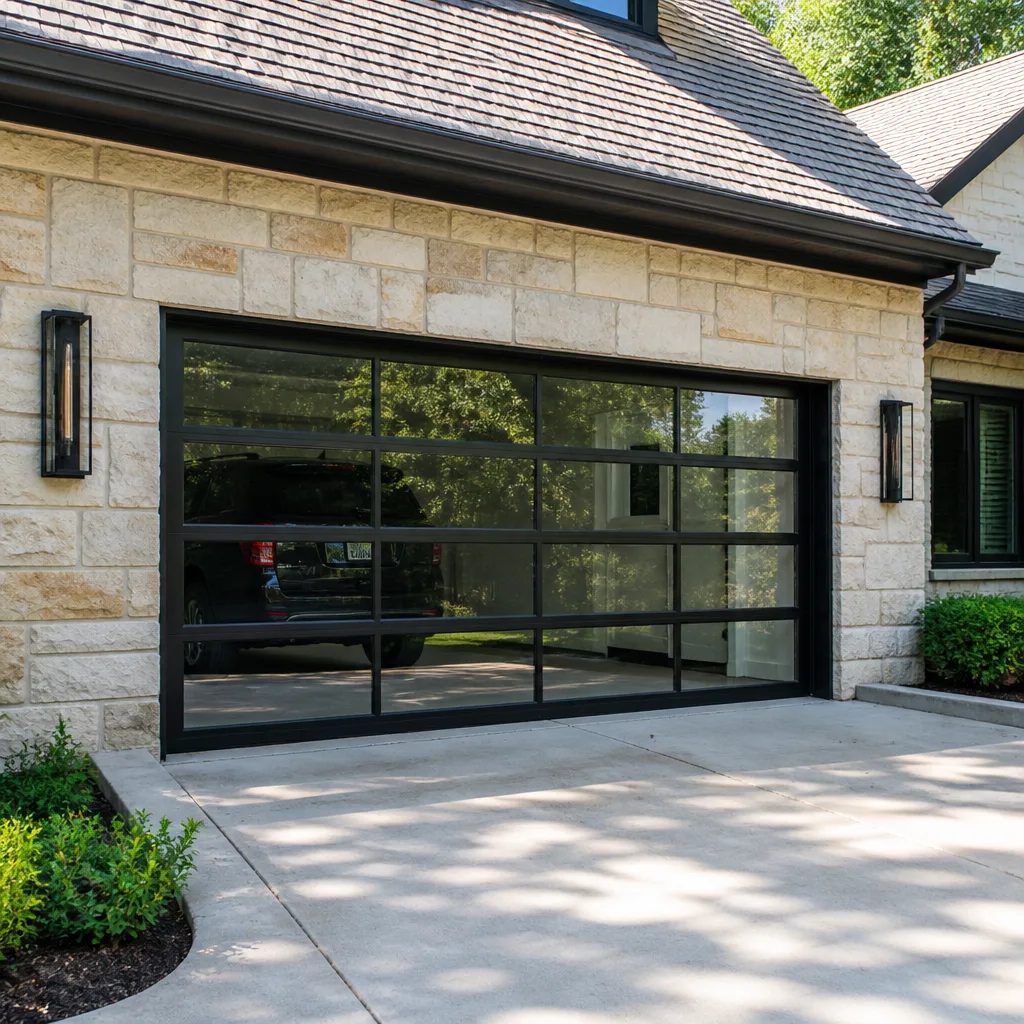 Full-view glass
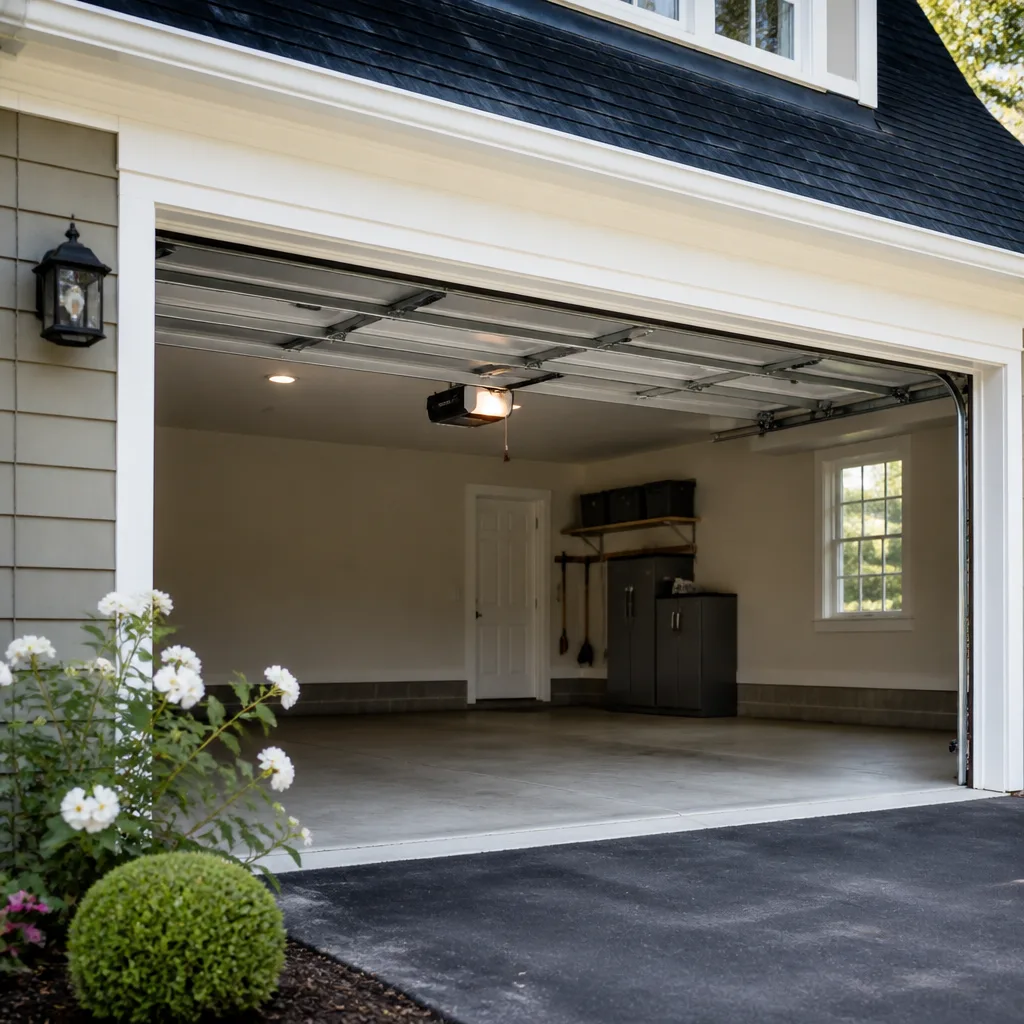 LiftMaster openers
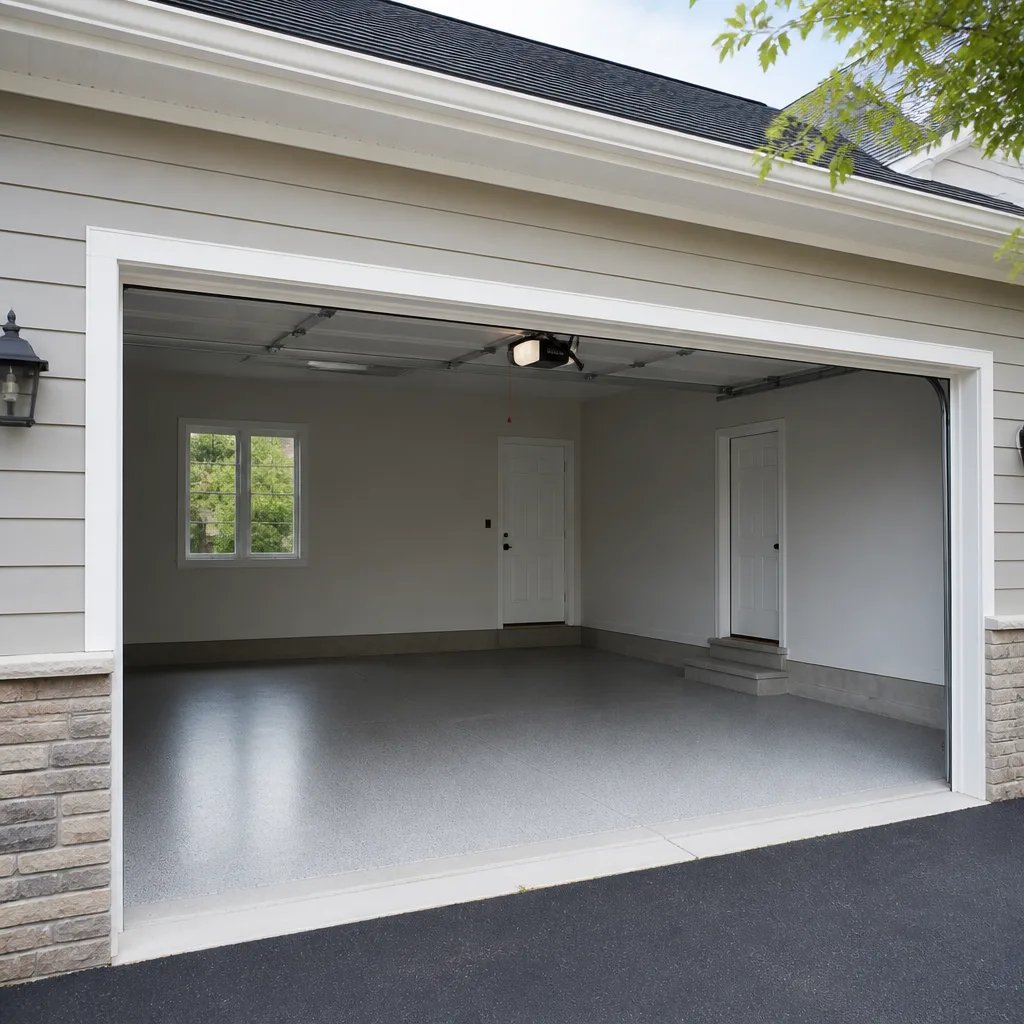 Chamberlain openers
Full 25-point door and opener safety check with every visit - springs, cables, rollers, tracks, and your LiftMaster or Chamberlain opener included
You get a price before we start. It does not change when the pro arrives.
Get your free estimateThe Complete Guide to Garage Doors in Chesapeake
A steel door installed near the water in Great Bridge ages differently than the same door installed deeper inland in Greenbrier. That’s the part nobody tells you. Garage doors here deal with humidity swings, temperature jumps, and lots that are wide and low to the ground, and a lot of the advice you’ll read online was written for a climate that isn’t yours. This guide covers the parts that matter in Chesapeake: which materials hold up where, which door profiles match the brick houses most of us live in, how spring systems handle the January-to-August swing, and what a full replacement actually involves so you aren’t surprised by the scope.
Quick Answer
Choosing a garage door in Chesapeake comes down to matching material to your lot and your exposure, not picking the cheapest panel at a big-box store. Steel with a proper factory finish works in most of the city, aluminum and fiberglass are worth considering where moisture is heavier, and torsion springs handle our temperature swings more reliably than extension systems. The written estimate, not the sticker, is what your job will cost.
Table of Contents
- Which garage door material works best in Chesapeake?
- Which door styles match Chesapeake’s housing stock?
- Torsion vs. extension springs in Chesapeake’s climate
- Choosing an opener that fits your home and your HOA
- Repair or replace: how to decide
- What a full door replacement actually involves, step by step
- A simple maintenance routine for Chesapeake homeowners
- What to do when your door won’t move
Which garage door material works best in Chesapeake?
Steel is the default in most of Chesapeake, and for good reason: it holds a factory finish well, comes in the widest range of profiles, and stands up to normal humidity if the paint film is intact. The catch is that steel is only as good as its coating. Once a scratch or a chip gets through to bare metal, rust starts, and humidity speeds that process up. Where the air stays damper – low-lying lots, homes close to the inland waterways around South Norfolk, properties with dense shade on the north side of the door – that coating matters more than the gauge of the steel.
Aluminum is lighter and won’t rust the way steel will, which makes it a reasonable pick for the wetter pockets of the city. The tradeoff is that aluminum dents more easily and doesn’t insulate as well unless it’s built with a filled core. Fiberglass sits in the same lane: it resists moisture and won’t corrode, and it’s a strong choice for homeowners who want light through the upper panels. It dents too, and the finish can chalk over time if it’s left unpainted for years.
- Steel: best all-around pick for most of Chesapeake, provided the factory finish is intact and any chips get touched up.
- Aluminum: worth the extra cost on damp lots and where you want a lighter door that won’t rust.
- Fiberglass: a fit for homeowners who want a lightweight, non-corroding door and don’t mind a gentler finish.
- Wood: beautiful on brick colonials, but it needs refinishing here far more often than people expect.
The rule we give Chesapeake homeowners is simple: pick the material that matches your exposure first, then pick the profile you like. Doing it the other way around is how you end up replacing a door early. If you’re sorting through options, our garage door installation team walks through material choice before anyone measures anything.
Which door styles match Chesapeake’s housing stock?
A door that looks grafted onto a house reads as a mistake from the street, and in Chesapeake the housing stock has strong opinions. Brick colonials and similar traditional styles dominate a lot of the neighborhoods, and those homes want a raised-panel door with the right proportions – a wide-panel design that echoes the columns and the brick coursing. A flush, minimalist panel looks great on a modern build and looks strange on a brick colonial, no matter how good the door is.
Carriage house doors are the other common request. They suit the two-story colonial look and the set-back lots in parts of Great Bridge, and they can carry a lot of character if the hardware and panel layout are chosen to match the house rather than borrowed from a catalog page. The trick is not to overdo it. A carriage door with the wrong proportions, or with a too-busy hardware set, ends up pulling attention away from the house instead of reinforcing it.
Where lots are wide and detached garages sit away from the house, panel proportion matters even more, because the door is seen as a standalone face rather than part of a facade. A wide door on a broad lot wants panel proportions that don’t look stretched. Narrow doors on tight lots want a tighter panel rhythm.
- Brick colonial: raised panel in a traditional layout; match the panel rhythm to the brick and the windows.
- Ranch and split-level: raised panel with a lower-profile hardware set, or a simple carriage house profile.
- Modern build: flush or minimal panel with a clean, uncluttered face.
- Detached garage on a wide lot: panel proportions that don’t stretch across the opening.
If you’re matching a door to an existing house, it’s worth having a specialist look at the proportions before you order. We work on the brand already on your garage – Clopay and Amarr among them – which means we can talk about panel options in the context of what fits your house rather than a generic catalog.
Torsion vs. extension springs in Chesapeake’s climate
Chesapeake’s temperature swing between January and August is the single most demanding thing your spring system deals with, and it wears differently depending on which system you have. Extension springs stretch along the sides of the door and rely on open coils doing the lifting work. Torsion springs twist on a bar above the door and lift through a counterbalance system. Both work. Torsion systems hold their settings more consistently across large temperature swings, which is why we generally recommend them where the door is getting replaced or a spring system is being upgraded.
The reason is that springs are heat-sensitive. A spring rated for a given door weight provides that lift within a temperature band. Push it cold in January and it works harder; push it hot in August and it can lose some of its tolerance. Over seasons, that cycle is what wears a spring out – not a single failure moment. Extension springs tend to stretch unevenly over time as the two sides take slightly different loads, while torsion springs wear more evenly across their cycle. That doesn’t make extension springs unsafe. It just means they need to be inspected more carefully and replaced in matched pairs more often.
One thing we’re careful to say: spring work is the most mechanically dangerous job on a garage door. A wound torsion spring holds a dangerous amount of stored energy, and extension springs under tension can cause serious injury if a cable or restraint fails. Please don’t attempt a spring replacement on your own. Have a trained technician handle it. When a spring goes, it’s rarely a case of tightening a bolt; it’s a case of matching a spring to the door’s actual weight and track geometry, which is why we recommend a specialist look at it every time.
Typical cost for a single torsion spring replacement in the Chesapeake area runs in the range most homeowners expect for the job, and a matched pair is usually replaced together, so the pair costs about twice one spring. We quote before we start – the written estimate sets the final price. When a spring breaks, that’s usually when people call us for garage door repair.
Choosing an opener that fits your home and your HOA
Openers in Chesapeake tend to run into the same two issues: compatibility with the door you already have, and compatibility with the neighborhood’s rules. On compatibility, brands matter because the mechanism matters. LiftMaster and Chamberlain share a lot of logic and accessories. Genie openers use a different set of remotes and settings. Craftsman and Raynor each have their own conventions. When a technician already knows the brand on your garage, diagnosis is faster and the fix is more targeted.
On HOA rules, a handful of Chesapeake communities have restrictions you should check before you buy. Some restrict the visibility of the motor from the street – which usually means a jackshaft or wall-mounted opener instead of a ceiling-mounted unit. Others have noise guidelines aimed at exterior equipment near shared walls or property lines. Belt-drive openers run quieter than chain-drive units, which is the practical answer for a motor that sits near a bedroom or a neighbor. We won’t guess at what your specific HOA requires. Read your covenants before you buy, and if you want a quiet, low-profile unit for a stricter community, say so up front so the right opener gets specified.
- Ceiling-mounted, chain-drive: the standard, louder unit. Fine where noise isn’t restricted.
- Ceiling-mounted, belt-drive: noticeably quieter, the safer pick near bedrooms and shared walls.
- Jackshaft / wall-mounted: opens up the ceiling and keeps the motor out of sight, often the HOA-friendly pick.
- Smart-enabled openers: useful if you want phone alerts when the door is left open, but check network compatibility before ordering.
If your opener is failing, that’s a separate job from the door itself, and we handle it as one: garage door opener repair covers the motor, logic board, sensors, and remotes on the brands we service.
Repair or replace: how to decide
The honest answer is that most garage doors are repairable long after homeowners start thinking about replacement. Panels, tracks, rollers, hinges, springs, and openers can each be replaced or repaired without touching the rest of the system. A snapped spring or a bent track is not a dead door. The threshold for replacement usually comes down to three things: structural damage across multiple panels, a door that’s no longer safe to operate because the frame or the counterbalance system is compromised, or a style or insulation upgrade the homeowner wants anyway.
Here’s the decision order we suggest for Chesapeake homeowners:
- Is the door safe to operate? If a panel is cracked, a cable is frayed, or the door is off its track, stop operating it and get it looked at before anything else.
- Is the damage local? A single damaged panel, a bent section of track, or a worn roller is a repair, not a replacement.
- Is the counterbalance system sound? Springs and cables are wear items. Replacing them keeps a good door in service for a long time.
- Is the door still the right door for the house? If the style doesn’t fit the architecture, or the insulation is inadequate for an attached garage, replacement starts to make sense.
- Is the opener the bottleneck? A modern door on an old opener is a mismatch. Sometimes the better upgrade is a new opener, not a new door.
None of this is a call you have to make alone. Our technicians have up to 9 years of experience, and a free estimate tells you what’s actually wrong before you commit to anything.
What a full door replacement actually involves, step by step
Full replacement isn’t a same-day purchase-and-install. It’s a measured job: someone comes out, measures the opening and the existing track geometry, and writes up the door spec. Then the door gets ordered, delivered, and installed on a scheduled day. That timeline matters because it’s the part most homeowners underestimate – they think they’ll buy a door and hang it the same week.
- Measure and spec. We measure the rough opening, check the headroom, the side clearance, and the track configuration, and confirm the door weight and counterbalance type. The written estimate comes out of this visit.
- Order the door. Doors are built to spec, which means a lead time. That lead time depends on the manufacturer, the profile, and whether the door is a stock size or a custom one.
- Prepare the opening. On install day, the old door and track come out. The opening is checked for square, and any damage to the framing or the spring anchor is addressed before the new hardware goes on.
- Install the track and hardware. The vertical and horizontal track are set, followed by the hinges, rollers, and brackets. This is where fitting matters – a track that’s a few degrees out will bind later.
- Set the spring system. The torsion bar or extension springs are set to the door’s actual weight. This is the step that determines whether the door feels balanced and lasts.
- Hang the door and test balance. The door goes onto the track and is tested at mid-height to confirm it holds in a half-open position. Anything that isn’t balanced gets adjusted before the opener connects.
- Install and program the opener. The opener is mounted, the safety sensors are aligned and tested, and the travel limits and force settings are dialed in. Remotes are programmed and the safety reverse gets a live test.
- Final walkthrough. We operate the door with you, check the seals and the bottom weatherstrip, and walk through what to keep an eye on.
If your door is at the replacement stage, the team at Chesapeake Garage Door Repair Experts handles the whole job: measure, order, install, and the ongoing service after. One number, one relationship. Call (877) 419-7485 for a free estimate.
A simple maintenance routine for Chesapeake homeowners
A little seasonal attention goes a long way with the local weather cycles. Twice a year, walk the door through a simple check while it’s closed, and again while it’s in motion. You’ll catch most problems before they become expensive ones.
- Lubricate moving parts. Rollers, hinges, and the torsion bar bearings want a garage-door lubricant, not a general household oil. Do this in the spring and in the fall.
- Check the weatherstrip. The bottom seal takes the most abuse. If it’s cracked or hardened, it’s not sealing, and that’s what lets humidity into the garage.
- Test the safety reverse. Put an object in the door’s path and confirm the door reverses. If it doesn’t, adjust or call for service before relying on it.
- Look at cables and springs. Frayed cables or springs with visible gaps should be inspected by a technician, not worked on. This is the check-and-call one.
- Wipe down the door face. Keep any scratches sealed with touch-up paint so humidity can’t get under the finish and start the rust cycle.
- Check the balance. Disconnect the opener and lift the door halfway. A door that won’t hold in position is a spring problem waiting to get worse.
If anything on that list looks off, get it looked at. A repair now is far cheaper than a panel replacement after a door fails on the track.
What to do when your door won’t move
When a door won’t open, the first job is to figure out whether it’s a spring, an opener, or a track problem – and the second is to move fast if the door is your primary entry. Here’s the practical order:
- Stop using the opener. If the door is off its track or a panel is hanging loose, don’t cycle it. Park the car and use the other entry if you have one.
- Check the obvious. Confirm the opener is powered, the safety sensors aren’t blocked, and the manual lock isn’t engaged (this happens more than people admit after a power flicker).
- Don’t muscle a stuck door. Forcing a door that’s off-track can drop it or flip a panel. Call for service rather than pulling.
- Call and describe what you see. The more specific your description – door hangs low on one side, motor runs but door doesn’t move, loud bang from above the door – the faster the fix.
Call (877) 419-7485. We answer 24/7. Fast dispatch from 7am to 7pm, Sunday through Friday, and if a door fails on a Saturday, we’ll book you into Sunday. Those first calls are where a specialist’s brand knowledge pays off. When your door won’t move, we will – and the door between you and your home deserves a specialist, not a generalist.
Common Mistakes to Avoid
- Buying on price before material. A cheap steel door in a damp pocket of Chesapeake will cost more over its life than an aluminum or fiberglass door that fits the exposure. Match material to place first.
- Skipping the HOA check on the opener. A ceiling-mounted unit is fine in most of the city, but some communities restrict motor visibility or exterior noise. Read the covenants before you buy, not after.
- Replacing a spring with the wrong rating. Springs are matched to door weight. A guess is how doors end up unbalanced and how repeat failures happen. This one is not a DIY job.
- Ignoring a small chip in the finish. In this humidity, a chip in the paint film is where rust starts. Touch-up paint costs almost nothing.
- Assuming a panel match will be a perfect visual match. Doors from different production runs can look slightly different. If a single panel is being replaced, get the model and the finish confirmed up front.
- Choosing a style that fights the house. A flush panel on a brick colonial, or a carriage door on a modern build, reads as a mistake. Take the house into account before the catalog.
- Letting a bent track go. A slightly bent track is cheap to fix now and expensive if it wears out rollers or throws the door off its line.
Styles & brands we work with
- Raised-panel steel
- Carriage house
- Modern flush
- Full-view glass
- LiftMaster openers
- Chamberlain openers
When to Call a Professional
Call a professional when a spring breaks, a cable frays, or the door won’t stay balanced. Call when a track is bent and the door won’t close fully, when a panel is cracked or loose, or when the opener doesn’t reverse on the safety test. Call if you’re not sure whether the problem is the door or the opener. Nothing on this list is worth experimenting on – especially the springs, which can cause serious injury if handled by anyone without the right training. The other reason to call early is aesthetic: a small cosmetic issue that’s ignored in a damp Chesapeake summer can turn into a finish problem that’s more expensive to fix. Chesapeake Garage Door Repair Experts offers free estimates in Chesapeake – call (877) 419-7485.
See the difference
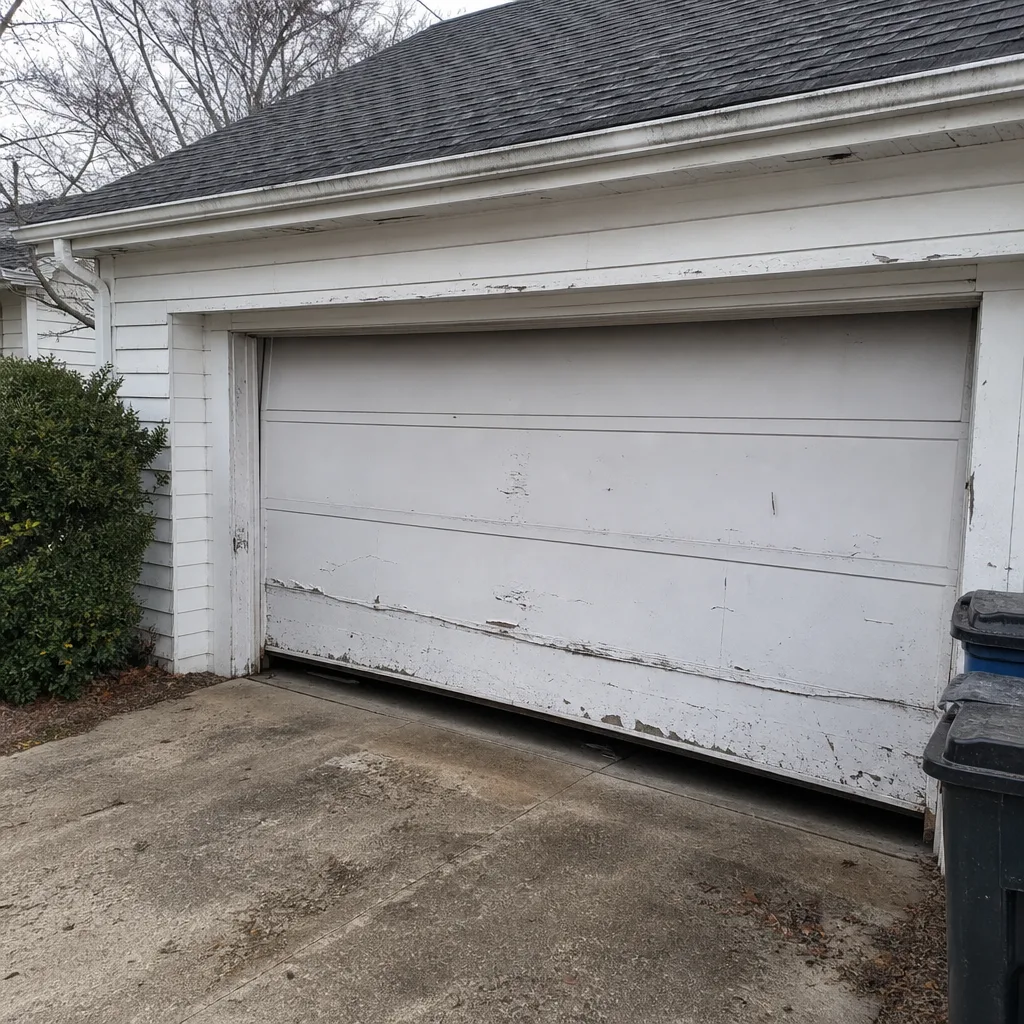 Before
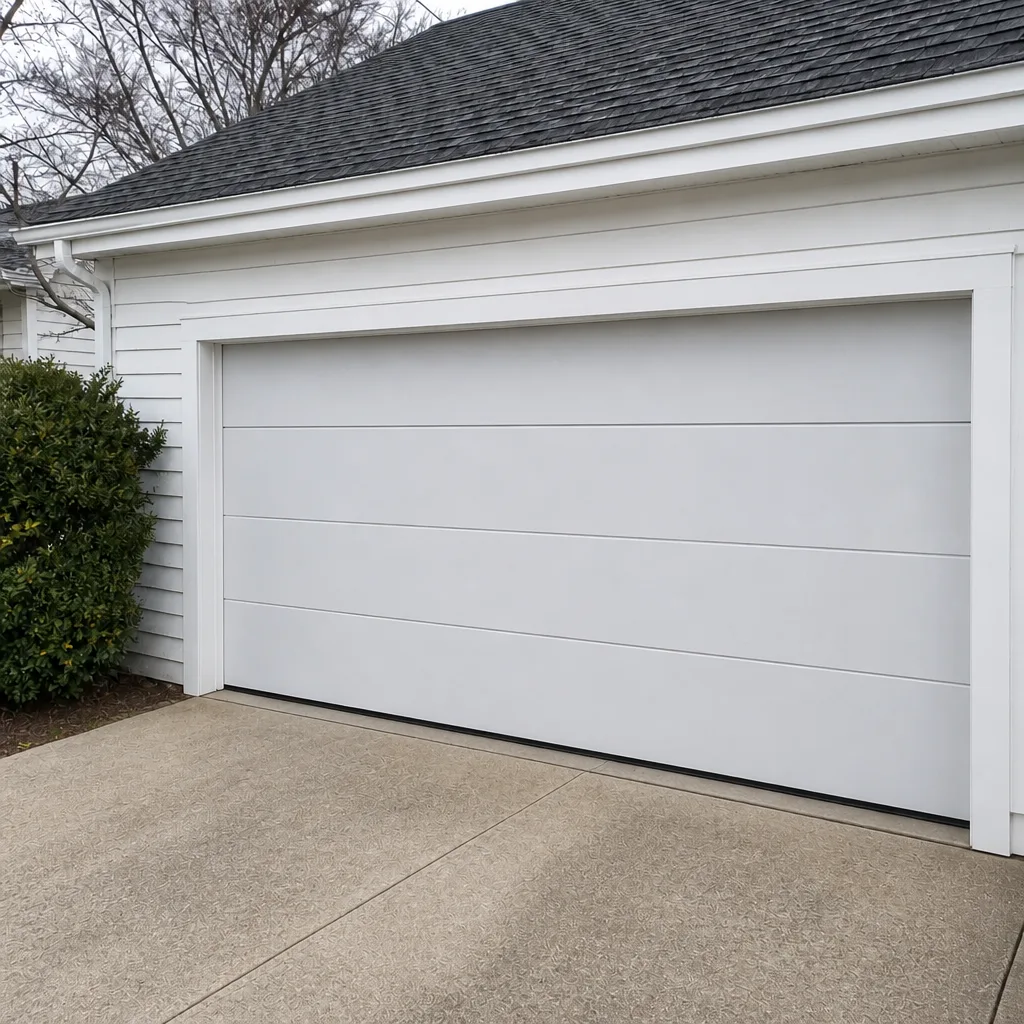 After
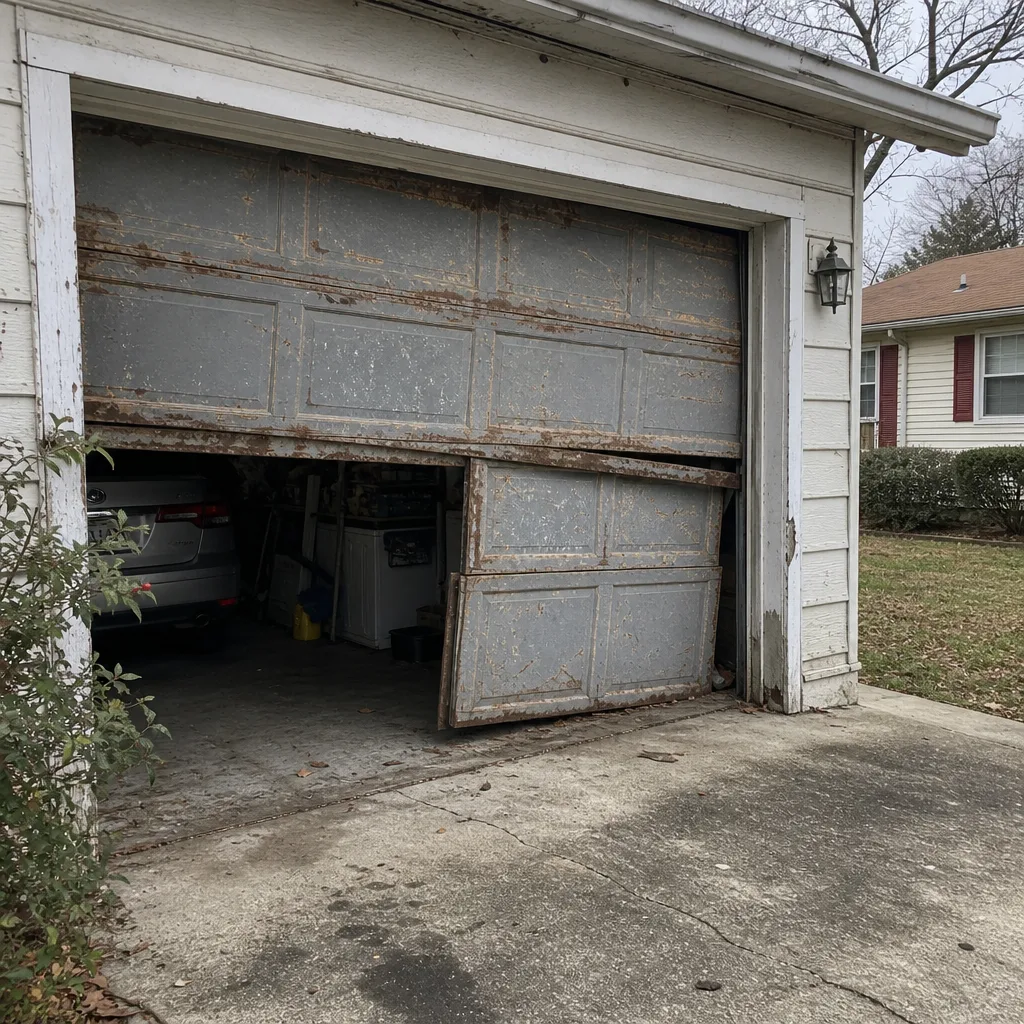 Before
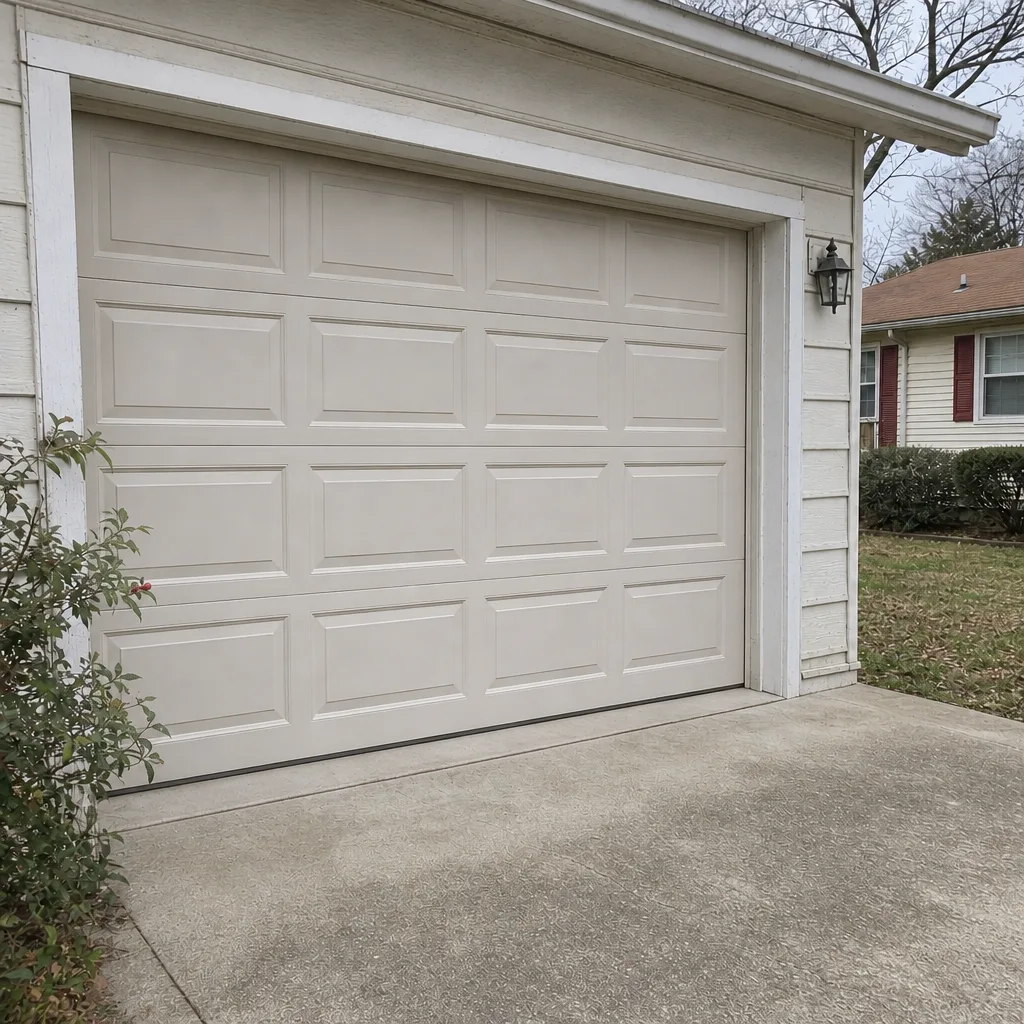 After
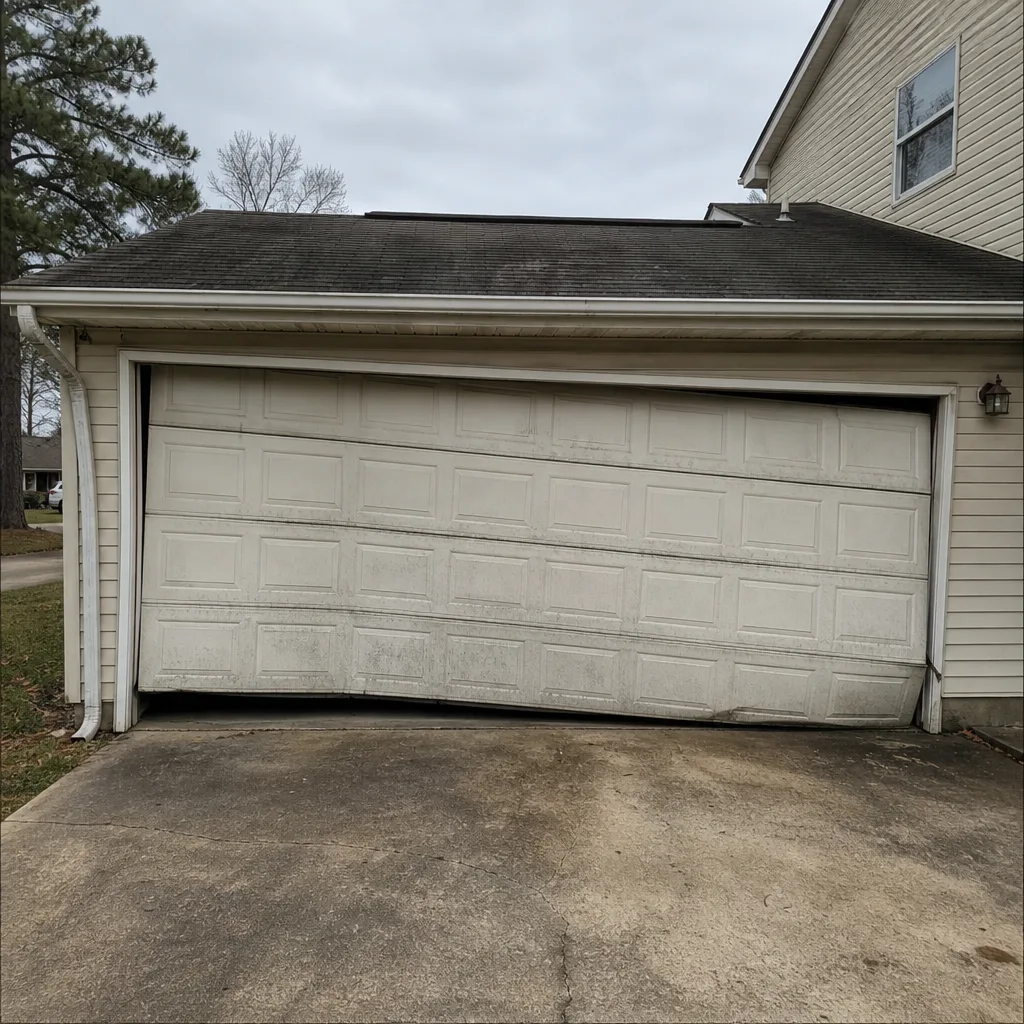 Before
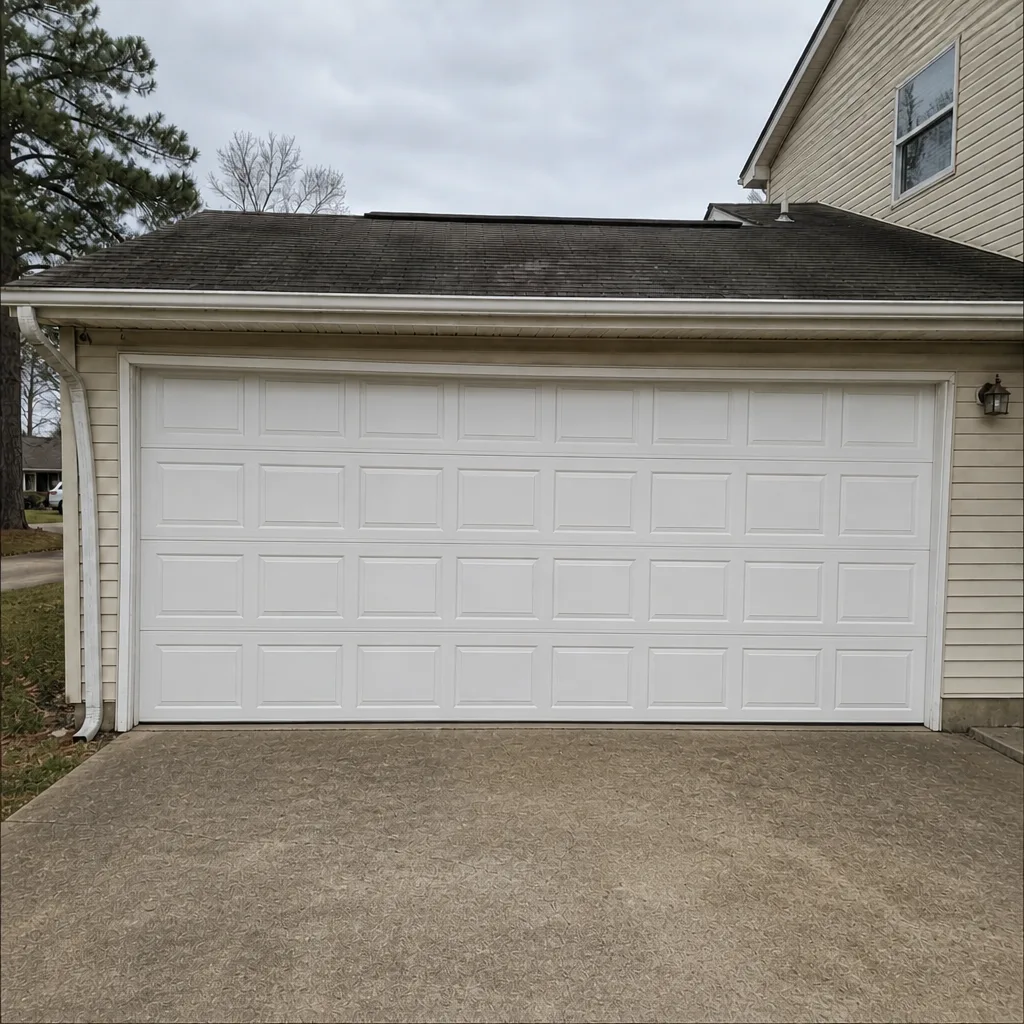 After
Frequently Asked Questions
Most garage door repairs in Chesapeake run from a few hundred dollars for a spring or opener fix to more for a full panel or track replacement, and the written estimate sets the final price. There’s no separate service-call fee for the estimate – it’s free, and the price is quoted and agreed before any work starts. Call (877) 419-7485 for an exact quote.
For repair and spring issues, same-day service is often possible. We answer 24/7 and dispatch crews Sunday through Friday, 7am to 7pm. Call (877) 419-7485 and describe the problem – the more specific you are, the faster we can get the right technician out.
Steel with a properly maintained finish works for most homes in Chesapeake, aluminum is a good choice where the air stays damp, and fiberglass is worth considering where you want a lightweight door that won’t rust. The right answer depends on your lot’s exposure and the house style, which is why we look at both before recommending anything.
Torsion springs twist on a bar above the door and hold their settings more consistently across big temperature swings. Extension springs stretch along the sides and can wear unevenly over seasons. In Chesapeake, the January-to-August swing makes torsion the more reliable choice for most doors. Either way, spring work is a job for a trained technician – not something to attempt on your own.
Installing a new door typically takes one scheduled day, but the job starts long before install: measuring and spec, ordering the door, and confirming the lead time. That’s measured, ordered, and scheduled – not same-day. Call (877) 419-7485 for a free estimate and we’ll walk through what the timeline looks like for your door.
Yes – the technicians are trained, and the work is quoted before it starts. Our team has up to 9 years of experience, and we work on LiftMaster, Chamberlain, Genie, Clopay, Amarr, Wayne Dalton, Craftsman, and Raynor systems. Call (877) 419-7485 with your brand and the problem, and we’ll match you with the right technician.
The Bottom Line
Garage doors in Chesapeake live with different conditions than they do in most of the country, and the right choices follow from that. Match material to exposure first, then style to the house. Trust torsion springs over extension where you can, keep the finish sealed, and don’t take spring work into your own hands. If something is broken, the fastest path is a phone call – repairs are often same-day, and replacements are measured, ordered, and scheduled with a written estimate before anything starts. We work on the brand already on your garage, and we’re here when your door won’t move. Call (877) 419-7485 for a free estimate.
Written by the team at Chesapeake Garage Door Repair Experts.